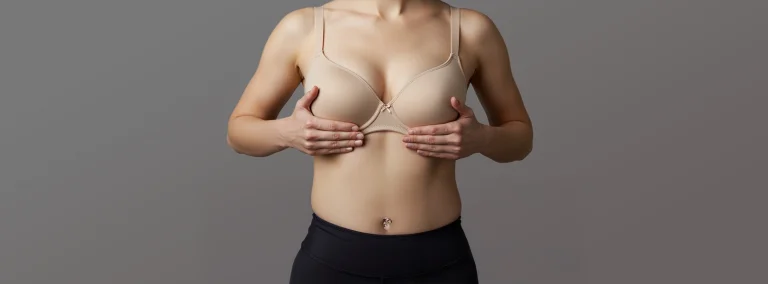
Nipple aesthetics includes nipple and areola surgery for inverted nipples, nipple or areola size concerns, and reconstruction after tissue loss. The appropriate technique, anaesthesia, recovery, and possible effect on sensation or breastfeeding depend on the individual anatomy and procedure.
- Nipple and areola surgery can address nipple inversion, prominent or enlarged nipples, enlarged areolae, and missing nipple reconstruction.
- A new nipple change, discharge, skin change, or breast lump should be clinically assessed before an aesthetic procedure is planned.
- Inverted nipple correction may involve releasing tethering tissue, and the technique can affect future breastfeeding potential.
- Areola reduction is sometimes combined with breast lifting or breast reduction when breast shape and areola size change together.
- Dressing care, a supportive bra, healing changes, scars, sensation changes, and possible recurrence should be discussed before nipple surgery.
Nipple aesthetics refers to surgery that changes the shape, size or position of the nipple and the areola. Often called nipple correction surgery, it may address inward-pulled nipples, nipple length or width, areola diameter, side-to-side differences or a missing nipple, and it is sometimes planned alongside breast asymmetry treatment.
Nipple aesthetics: what does nipple and areola surgery cover?
Nipple and areola surgery is a group of operations that can alter how far the nipple projects, reduce its length or width, reduce the diameter of the areola, or recreate a nipple that is absent. Each of these is a distinct procedure with its own planning, and more than one may be combined when the anatomy allows.
The nipple is the raised central structure through which the milk ducts open, while the areola is the pigmented skin that surrounds it. Both vary considerably between individuals, and variation on its own is not a medical problem. Size, projection and pigmentation differ with genetics, breast development, hormonal cycles, pregnancy, weight change and ageing, and many women notice that their nipples and areolae changed after breastfeeding.
Other changes have a clearer cause. Some nipple shapes are present from birth or appear during breast development. Scarring after trauma, burns or infection can tether or distort the nipple, and surgery for breast cancer may remove the nipple and areola entirely. These situations are planned differently from purely cosmetic concerns.
Suitability for any of these procedures is decided by a plastic surgeon after a medical history and physical examination. This matters particularly when a nipple change is new or unexplained, for example recent inward retraction, skin change or discharge, because such findings need clinical assessment before any aesthetic procedure is considered.
Inverted nipple correction
Inverted nipple correction is surgery for a nipple that stays pulled inward or does not project in the usual way, also described as a sunken nipple. In most cases the inversion relates to short milk ducts and tight fibrous bands beneath the nipple that tether it from below. The degree varies, and surgeons commonly describe three grades: in grade 1 the nipple comes out easily with gentle pressure or stimulation and stays out for a while; in grade 2 it can be drawn out but quickly retracts; in grade 3 it remains permanently retracted. How each inverted nipple grade shapes the choice of technique and the likelihood of preserving the ducts is a central part of the consultation.
Inversion that has been present since breast development is usually anatomical. Inversion that develops later in life is a different situation and should be assessed clinically before any aesthetic treatment is planned. Assessment looks at projection, the amount of tethering beneath the nipple, symmetry between the two sides, previous breastfeeding, existing scarring and whether the patient wishes to preserve the possibility of breastfeeding.
Correction involves carefully releasing the tissue that pulls the nipple inward, avoiding damage to the milk ducts wherever the grade allows. Depending on severity, a small amount of the patient’s own fat or deeper skin tissue may be placed beneath the nipple as support, and the nipple is held in its new position with fine internal sutures. Where a patient is already planning breast augmentation, reduction or a lift, correction can be carried out during the same operation; it can equally be performed on its own when the breast itself needs no change.
Suction devices sold as nipple correctors can draw out a grade 1 nipple and sometimes keep it out while they are worn regularly, but they rarely give a lasting result in grades 2 and 3, where the tethering bands remain. Informed consent for surgery includes the possibility of recurrent inversion, altered nipple sensation, scarring and a possible effect on future breastfeeding.
Nipple reduction for long or wide nipples
Nipple reduction can reduce excessive nipple length, width or prominence when these features are a concern. It is a limited procedure directed at the nipple itself rather than at breast volume or position.
Nipple size and projection vary naturally, and assessment considers both sides together, overall breast proportions, areola diameter, any existing scars and whether the concern is isolated or part of broader breast change. When the nipple appears to point downward, the cause is usually breast sagging rather than the nipple itself, and treating the nipple alone would not produce the balance the patient expects.
When only the width is a concern, a small incision is made around the base of the nipple and a measured amount of tissue is removed. When the nipple is long and very prominent, a different incision pattern shortens it while keeping the central milk ducts intact. Healing, scar visibility, sensation, symmetry and breastfeeding implications differ according to the technique and individual anatomy, so these points are discussed before surgery rather than afterwards.
Areola reduction
Areola reduction reduces the diameter of an enlarged areola, or improves the balance between the areola and the breast it sits on. The procedure changes the pigmented border rather than the breast volume.
Areola size and colour vary normally and may change with hormonal shifts, pregnancy, ageing, skin stretching or alterations in breast shape. A wide areola is not in itself a sign of disease. The usual approach is to remove a ring of pigmented skin around the areola and close the outer edge around a smaller circle, so that the scar lies at the junction of the areola and the breast skin, where it is least visible. A permanent internal suture is often placed to limit stretching. Considerations include the circular scar, the tendency of an areola to widen again as skin stretches, and changes in sensation; keeping sensation is one of the main aims when areola reduction surgery is performed on its own.
When the breast has descended and the areolae have enlarged with it, areola reduction is frequently carried out as part of breast lift surgery, since the lift incision already passes around the areola. In other cases the areola looks disproportionate mainly because of breast weight; here breast reduction surgery addresses the underlying cause, with the areola resized within the same plan.
Puffy areolas and tuberous breasts
A domed, puffy areola that seems to bulge forward from the breast is sometimes a feature of tuberous breasts, in which breast tissue pushes into the areola through a weak point beneath it. In this situation, reducing the areola alone tends to give a temporary improvement. The breast base, the fold beneath the breast and the volume are assessed together, and the areola is reshaped as part of that wider correction.
Nipple reconstruction and areola tattooing
Nipple reconstruction recreates a nipple and areola when they are absent following mastectomy, trauma, burns or a congenital condition. It is usually the final stage of breast reconstruction, carried out once the reconstructed breast has settled in shape and position.
Several methods exist. Local breast skin at the intended nipple site can be raised and folded to create projection; skin grafts from another suitable area may be used; in selected situations part of the opposite nipple can be shared; and medical tattooing can define areola colour and surface detail. These techniques are often combined, and the options for nipple reconstruction after mastectomy are chosen according to the skin available and any history of radiotherapy. Reconstructed projection commonly settles and flattens to some degree during healing, which is why planning allows for this and why staged refinement is sometimes discussed.
Tattooing is also used where the nipple is present but the areola is very small, pale or uneven in colour. Medical pigment can enlarge the visible areola and match the two sides without further surgery, and it can be repeated if the colour fades over the years.
Decisions relating to cancer treatment remain with the treating breast and oncology team, and reconstruction timing is planned in agreement with them.
How is nipple surgery performed?
Nipple surgery is planned after an in-person examination establishes whether the issue involves inversion, nipple size, areola diameter, absence of the nipple or a combination of these. The same complaint does not always lead to the same operation.

Consultation covers medical history, smoking and nicotine use, current medicines and supplements, allergies, previous breast surgery, breastfeeding plans, any breast symptoms, skin quality and the change the patient hopes to see. Patients are asked to stop or reduce smoking about two to three weeks before surgery, as nicotine reduces blood supply to the nipple. Blood-thinning medicines and herbal teas are stopped or adjusted under the guidance of the clinician who prescribes them, and nail polish, jewellery, nipple piercings and contact lenses are removed before the operation.
Local or general anaesthesia is used, according to the planned procedure and individual patient factors. Inverted nipple correction and nipple or areola reduction are often carried out under local anaesthesia as a day case, while combined breast operations and reconstruction are performed under general anaesthesia. Surgery takes one to two hours, varying between patients, with reconstruction after nipple loss taking the longest. Fine absorbable sutures are used, so there are no stitches to remove.
What is recovery like after nipple surgery?
Recovery depends on the procedure performed and whether it was combined with another breast operation. For an isolated nipple or areola procedure, the usual course is:
- Day of surgery: the area is protected with a dressing, and most patients go home the same day after local anaesthesia.
- First two days: mild soreness that is usually controlled with simple pain relief; the dressing is kept dry until the first check.
- First week: desk-based work and daily routines are usually possible within a few days. After inverted nipple correction, a small protective dressing helps keep pressure off the nipple while it heals in its new position.
- Two to four weeks: a surgical or sports bra recommended by the surgeon is worn for a few weeks, and heavy lifting and upper body exercise are resumed gradually.
- Six to twelve months: scars around the nipple and areola fade and soften, usually becoming difficult to see against the pigmented skin.
Swelling, bruising, tenderness and temporary numbness around the nipple can occur. Possible complications include bleeding, infection, delayed healing, visible or thickened scarring, asymmetry, altered sensation, recurrence of inversion, changes in projection and effects on breastfeeding. With careful technique by an experienced plastic surgeon these risks are uncommon, and most are temporary. Increasing pain, spreading redness, discharge, fever or any unexpected change in the breast should be assessed promptly rather than observed at home.
Whether any of these procedures is suitable is determined by the examination carried out by Prof. Dr. Şükrü Yazar.
Nipple correction in Istanbul: planning a short stay
Because isolated nipple and areola procedures are short and usually done under local anaesthesia, they suit a brief visit to Istanbul. Photographs and a description of the concern allow a provisional plan online, and the final decision is made at the in-person examination before surgery.
A stay of three to four days is usually enough for an isolated procedure, allowing a wound check before the flight home. When nipple or areola surgery is combined with a breast lift, augmentation or reduction, the stay follows the plan for the larger operation, usually around a week. Dissolving sutures mean there is no need to return for stitch removal.
Questions patients ask about nipple and areola surgery
Is inverted nipple surgery a major operation?
No. Correction of an inverted nipple on its own is a minor procedure, often performed under local anaesthesia, and most patients go home the same day. It becomes part of a larger operation only when combined with breast augmentation, a lift or a reduction.
Can nipple surgery affect breastfeeding?
It can. The effect depends on the anatomy, the procedure performed and whether milk ducts need to be divided, which is more likely in grade 3 inversion. Future breastfeeding plans should be discussed before surgery so that the technique can be chosen accordingly.
Do nipple correctors work permanently?
Suction devices can help a mild, grade 1 inverted nipple while they are used regularly, but the effect often fades once they are stopped. In grades 2 and 3, where fibrous bands hold the nipple inward, they rarely give a lasting result.
Can the areola widen again after reduction?
Some widening can occur as the surrounding skin stretches, particularly after weight change or pregnancy. A permanent internal suture placed around the areola during surgery helps limit this.
What type of anaesthesia is used for nipple surgery?
Local or general anaesthesia may be used, depending on the procedure, whether it is combined with another breast operation and individual clinical factors. Isolated corrections are usually done under local anaesthesia.
Is there an age limit for nipple aesthetic surgery?
For cosmetic concerns, surgery is generally recommended after the age of 16 to 18, once breast development is complete. Surgery after trauma or for reconstruction is assessed according to the clinical situation, without a fixed age limit.
References
- Breast Lift — American Society of Plastic Surgeons
- Breast Reconstruction — American Society of Plastic Surgeons
- Treatment of the benign inverted nipple: a systematic review and recommendations for future therapy — The Breast (2016)
- Inverted nipple correction techniques: an algorithm based on scientific evidence, patients’ expectations and potential complications — Aesthetic Plastic Surgery (2021)
- A modified inverted nipple correction technique that preserves breastfeeding — Aesthetic Surgery Journal (2019)
- Current surgical techniques for nipple reduction: a literature review — JPRAS Open (2019)
Professor Şükrü Yazar, Consultant Plastic, Reconstructive and Aesthetic Surgeon, performs nipple and areola surgery at his practice in Nişantaşı, Istanbul.
The information here is for guidance only and does not replace examination, diagnosis or treatment.