Lipedema treatment combines symptom management, supportive therapies and, for selected patients, surgery to reduce affected fat tissue. The right approach depends on symptoms, disease stage, limb distribution, lymphatic findings, general health and an individual clinical examination.
- Lipedema is a chronic adipose-tissue disorder that commonly causes symmetrical, painful enlargement of the legs and may also affect the arms.
- Lipedema symptoms can include tenderness, easy bruising, heaviness, reduced mobility and a disproportionate limb shape despite general weight changes.
- Lipedema stages describe changes in tissue texture and limb contour, but stage alone does not determine the most suitable treatment.
- Non-surgical management can support comfort, mobility and swelling control, although it does not remove lipedema tissue.
- Lipedema liposuction may be considered after clinical assessment, with recovery and compression requirements tailored to the treatment plan.
Lipedema treatment addresses a chronic disorder of fat tissue that causes symmetrical, often painful enlargement of the legs and sometimes the arms. Management combines symptom-focused care with surgery in selected cases, depending on the disease pattern, mobility, skin quality, lymphatic status and an individual clinical assessment.
What is lipedema?
Lipedema, spelled lipoedema in British English, is a chronic disorder of adipose tissue, sometimes called painful fat syndrome. It predominantly affects women and often becomes noticeable around hormonal life stages such as puberty, pregnancy or menopause. A genetic contribution is suspected because the condition frequently appears in several women within the same family, although the exact cause remains uncertain.
Lipedema treatment usually combines symptom management, mobility support and, in selected patients, surgical removal of the affected fat tissue. The aims of care include easing pain and a sense of heaviness, supporting movement, reducing swelling where it is present and addressing disproportionate limb volume. These are realistic goals rather than promises: responses differ between individuals and no approach can be described as a cure.
A treatment plan should follow a medical examination by a clinician with relevant experience. Depending on the findings, care may involve plastic and reconstructive surgery, vascular or lymphatic assessment, physiotherapy, compression management and attention to coexisting health conditions.
Lipedema symptoms and areas affected
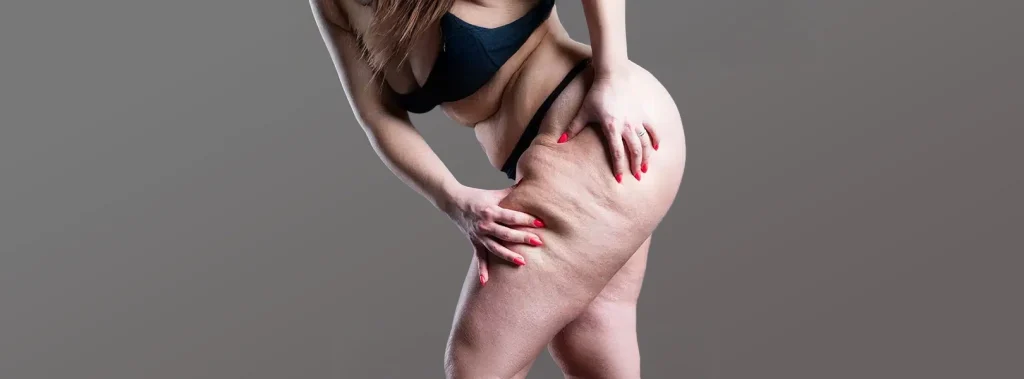
Lipedema symptoms commonly include symmetrical enlargement of the hips, thighs and lower legs, tenderness, pain, easy bruising and a feeling of heaviness. The tissue may feel nodular to the touch, and discomfort can increase with prolonged standing or pressure.
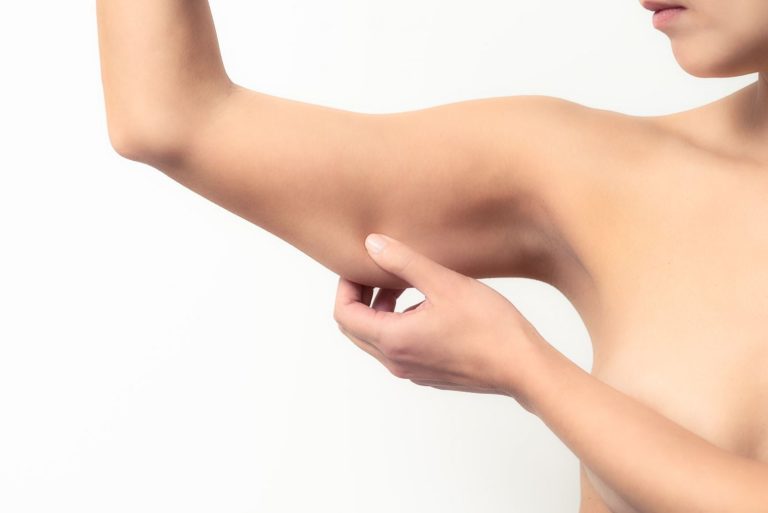
Fat accumulation often creates contour bulges around the hips, outer thighs, inner knees and lower legs. Some people also develop a similar pattern in the upper arms. The feet are frequently spared relative to the rest of the limb, which can produce a visible cuff or step at the ankle, although clinical patterns vary and this sign alone cannot establish a diagnosis.
As the condition becomes more limiting, reduced mobility, joint strain and ongoing discomfort may develop. Varicose veins, lymphatic swelling and emotional distress are described by some people as coexisting or later concerns; each requires its own assessment rather than being assumed to follow automatically.
The four stages of lipedema
Lipedema stages describe changes in skin texture, fat distribution and limb shape that can occur as the condition progresses. A four-stage description is commonly used in clinical practice:
- Stage 1: enlarged fat tissue beneath the skin with a relatively smooth skin surface.
- Stage 2: uneven skin texture with more distinct nodules beneath the surface.
- Stage 3: larger fat deposits with contour deformity around the thighs and knees.
- Stage 4: lipolymphedema, meaning lipedema accompanied by lymphatic swelling.
Staging is only one part of assessment. It does not fully predict how much pain a person experiences, how mobility is affected, how the skin will behave after volume reduction, or which treatment plan suits them. Progression is not uniform: some people remain stable for long periods, while others notice changes over a shorter time. For this reason, the stage is interpreted alongside symptoms, examination findings and the person’s own priorities. In lipedema surgery, stage mainly influences how many sessions are needed and how likely loose skin is afterwards.
How is lipedema diagnosed?
Lipedema is diagnosed primarily through medical history and physical examination, with imaging used selectively when another condition needs to be clarified. The examination considers the symmetry of enlargement, the distribution of affected tissue, tenderness on pressure, a tendency to bruise, the degree of foot sparing, skin texture, mobility and any family history of similar changes.

Distinguishing lipedema from other causes of large legs matters because each requires a different plan:
- Lipedema: symmetrical, tender fat on the legs or arms that bruises easily, usually sparing the feet, and changes little with dieting.
- Lymphoedema: swelling that often starts on one side, commonly involves the foot and toes, and may leave an indentation when pressed.
- Obesity: fat distributed across the whole body including the trunk, usually without tenderness, and responsive to weight loss.
- Constitutionally full legs: heavy calves or ankles without pain or bruising, which are a cosmetic matter addressed through leg aesthetics or ankle aesthetics rather than lipedema treatment.
Ultrasound, magnetic resonance imaging or lymphoscintigraphy may be considered in selected cases, particularly where lymphatic or venous involvement is suspected, but these investigations are not automatically required for every patient. Sudden one-sided swelling, redness or warmth in a limb, chest symptoms or acute shortness of breath need urgent medical assessment rather than self-treatment, as these can indicate conditions unrelated to lipedema.
Lipedema treatment at home
Lipedema treatment at home may help people manage comfort, mobility and swelling, but it does not remove lipedema tissue. Supportive measures include activity adapted to comfort and joint tolerance, attention to general health, careful skin care, avoiding prolonged immobility and using compression garments when they have been advised and fitted appropriately.
Diet and exercise reduce fat in parts of the body that are not affected, but they have little effect on lipedema tissue itself. This is why many people notice a slimmer waist or face while the legs change very little. Healthy eating and movement remain worthwhile for general health, joint load and wellbeing; they are simply not sufficient on their own to treat lipedema.
Gentle movement such as walking, swimming or cycling, pacing of daily activity and regular self-care routines can be supportive. They should not replace assessment when symptoms are progressing or when lymphatic problems are suspected.
Can lipedema be treated without surgery?
Lipedema can be managed without surgery when symptoms, stage, medical circumstances or personal preferences make conservative care more appropriate. Non-surgical care may include professionally guided compression, manual lymphatic drainage, physiotherapy, mobility support and management of coexisting health concerns such as venous disease or joint problems.
Lymphatic drainage and massage, usually delivered by physiotherapists, can reduce swelling and pain. They may not be necessary in the early stages, but in advanced stages they can provide significant relief. They do not remove abnormal fat tissue. Where conservative measures prove insufficient, surgical volume reduction with liposuction may be discussed as a separate option.
Conservative care remains important in the period leading up to an operation and throughout recovery, since compression and physiotherapy support healing and longer-term comfort. Choosing not to proceed with surgery is a legitimate pathway, and the decision can be revisited if symptoms change.
Lipedema liposuction: how the operation is planned
Lipedema liposuction removes the affected fat tissue in patients whose symptoms, anatomy and overall health make surgery appropriate. It is currently the only treatment that reduces the volume of lipedema tissue itself, which is why it is considered when symptoms persist despite conservative care.
Planning follows an examination of limb distribution, skin quality, mobility, lymphatic status, medical history and the person’s goals. Detailed measurements of each region to be treated are taken and the expected reduction is calculated in centimetres. This gives an estimate of the limb shape after surgery and determines the size of the compression garment, which must be ready before the operation because it is fitted while the patient is still asleep.
The technique is chosen by area. For the lower thighs and around the knees, a fine-cannula technique adapted for lipedema is used through tiny access points that do not need stitches. For the hips and upper thighs, VASER liposuction is usually preferred, with laser-assisted liposuction as an alternative. Whatever the method, the cannula is moved along the length of the limb in a way intended to limit disturbance of lymphatic vessels; no method can be described as fully preserving the lymphatic system or as free of risk. The operation follows the same basic steps as how liposuction is done in other areas, from anaesthesia to the cannulas used; the differences lie in technique and in the volume removed per session.
When several areas need treatment, surgery is staged across more than one session rather than removing a very large volume at once. Staging keeps each operation within safe limits and allows recovery between stages.
After substantial volume reduction, particularly in advanced stages, loose skin can remain. In suitable patients, a thigh lift may be planned later for the lower body, and an arm lift when the upper arms are affected, once swelling has settled and the final contour is clear. The wider range of skin removal surgery follows the same principle.
Material risks should be understood before consenting. These include bleeding, infection, fluid collection, contour irregularity, numbness or altered sensation, small scars at the access points, complications related to anaesthesia and the risk of thrombosis. Symptoms may persist to some degree, and further treatment can be needed.
Recovery after lipedema surgery
Lipedema surgery takes between 2 and 5 hours depending on the areas treated, and is performed under general anaesthesia. Patients stay in hospital overnight and usually go home the next day. No dressing is needed; instead, the compression garment is fitted before the patient wakes up.
- First five days: the garment stays on continuously. Short walks start from the first day to support circulation and lower the risk of clots.
- Day five: the garment is removed for the first time and the patient can shower.
- First month: the garment is worn day and night. Desk-based work is usually possible after one to two weeks, depending on how many areas were treated.
- Following months: the garment is worn during the day only for a further few months, which helps the skin adapt and limits sagging. Exercise is built up gradually from around four to six weeks.
- Six to twelve months: swelling has largely settled and the final limb contour can be assessed.
Swelling, bruising, soreness, fatigue and altered sensation are common in the first weeks, and the garment schedule follows the same principles as liposuction recovery with compression garments elsewhere on the body. Prompt contact with the clinical team is advised for increasing pain, fever, unexpected wound drainage, worsening one-sided swelling, breathing difficulty or any other sign suggesting a possible complication.
What results can be expected?
Studies following patients after lipedema liposuction report reductions in pain, heaviness and easy bruising alongside a more proportionate limb shape, and many patients need less compression and manual drainage than before. Improvement in walking and daily activity is often what patients notice most, beyond the change in appearance.
The treated fat tissue does not return, but lipedema remains a chronic condition. Untreated areas can still change, and significant weight gain affects all fat tissue, so whether liposuction results are permanent depends partly on how weight is managed in the years that follow.
Who may be considered for lipedema surgery?
People may be considered for lipedema surgery when a clinical assessment confirms a compatible pattern and symptoms remain significant despite appropriate non-surgical management, or when limb size substantially affects function and daily life. Suitability depends on the diagnosis, general health, fitness for anaesthesia, tissue and skin characteristics, lymphatic or venous findings, expectations and willingness to follow the aftercare plan.
Lipedema surgery is not a weight-loss operation. People whose weight is still changing significantly, or whose leg size is mainly due to general weight gain, are usually advised to stabilise their weight first, since this makes the diagnosis clearer and the surgical plan more reliable.
Suitability for any operation is determined after an in-person examination by Prof. Dr. Şükrü Yazar, not from photographs or a description of symptoms alone.
Lipedema surgery in Istanbul: planning staged treatment
Many patients travelling from the UK and Europe begin with an online consultation, sharing photographs, measurements and their medical history. This allows a provisional plan, including how many stages may be needed, but the final decision is made at the in-person examination in Istanbul before surgery.
A stay of about a week per stage is usually planned. This covers the night in hospital, the first garment change on day five and a check-up before the flight home. Flying is generally possible after about a week with the garment on, regular walking and good hydration during the journey. When treatment is staged, the next session is usually planned at least three months later, so that swelling from the first stage has settled; this rhythm shapes how staged lipedema liposuction in Turkey is fitted around flights and work.
In the short introductory video below, Prof. Dr. Şükrü Yazar presents his practice in Nişantaşı, Istanbul (the video is in Turkish).
Questions patients ask about lipedema
Is lipedema dangerous, and does stage 3 lipedema affect life expectancy?
Lipedema is not considered life-threatening in itself. In advanced stages, however, reduced mobility, joint strain and secondary lymphatic swelling can affect health and quality of life, which is why assessment and treatment are worthwhile at any stage.
Is lipedema hereditary?
Lipedema often occurs in families, which suggests a genetic contribution, but the specific causes and inheritance pattern are not fully understood. Hormonal changes may also be associated with when symptoms become more noticeable.
Does lipedema affect the feet?
The feet are usually spared in lipedema, while enlargement may extend to the ankles. Foot swelling can suggest lymphatic involvement or another condition and should be assessed clinically.
Is lipedema massage effective?
Manual lymphatic drainage and other massage techniques used by physiotherapists can reduce swelling and pain, particularly in advanced stages. They do not remove lipedema fat tissue and should be tailored to the person’s symptoms and findings.
Can lipedema come back after liposuction?
The fat tissue removed does not grow back, but lipedema is a chronic condition and untreated areas can still change over time. Weight stability, regular movement and compression when advised help maintain the result.
Can lipedema affect the arms?
Yes. Although lipedema commonly affects the hips and legs, some people also develop a similar pattern of painful, disproportionate fat in the upper arms, which can be treated in the same way.
Which doctor treats lipedema?
People who suspect lipedema can consult a specialist in plastic, reconstructive and aesthetic surgery. Care may also involve physiotherapists for drainage and compression, and vascular or lymphatic specialists where swelling suggests another condition.
References
- What is lipoedema? The condition explained — Lipoedema UK
- Lipedema: causes, symptoms and treatment — Cleveland Clinic
- Standard of care for lipedema in the United States — Phlebology (2021)
- S2k guideline lipedema — Journal der Deutschen Dermatologischen Gesellschaft (2024)
- Safety and effectiveness of liposuction modalities in managing lipedema: systematic review and meta-analysis — Archives of Plastic Surgery (2024)
- Pain reduction following liposuction for lower limb lipedema: a systematic review and meta-analysis — Aesthetic Plastic Surgery (2026)
Professor Şükrü Yazar, Consultant Plastic, Reconstructive and Aesthetic Surgeon, assesses and treats lipedema at his practice in Nişantaşı, Istanbul.
The information here is for guidance only and does not replace examination, diagnosis or treatment.