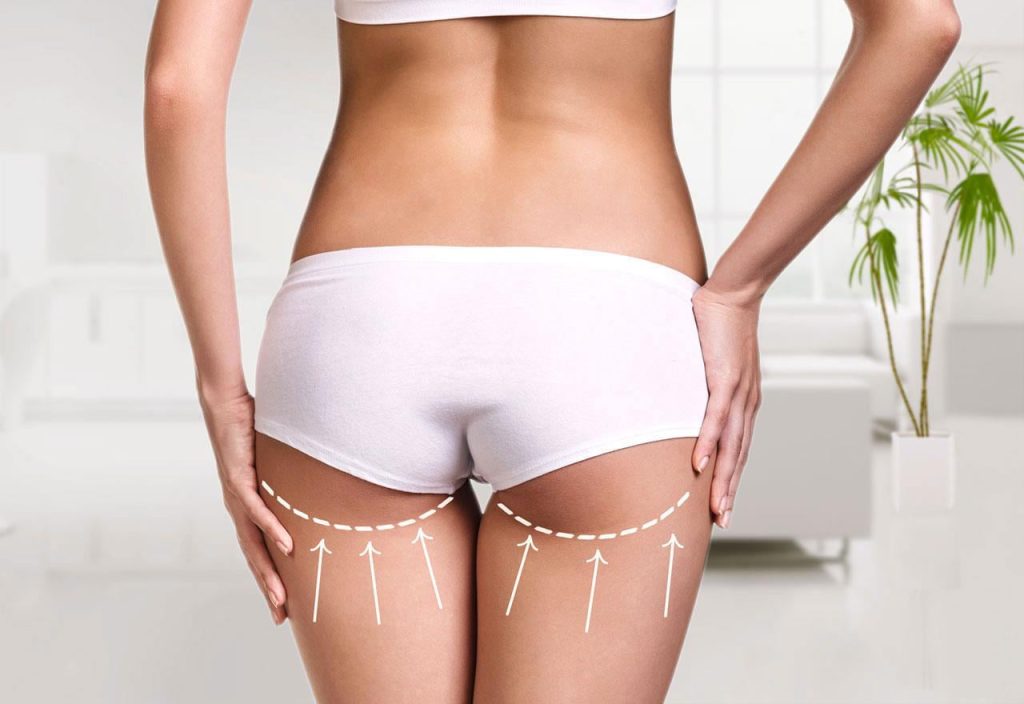
Buttock lift – hip lift surgery removes excess loose skin and elevates sagging buttock tissue, particularly when laxity remains after substantial weight loss. It differs from fat-transfer procedures because it primarily addresses skin excess; recovery, scars and the need for combined surgery vary by individual assessment.
- A buttock lift, also called a gluteal or hip lift, reshapes sagging buttock tissue by removing excess skin and lifting the remaining tissues.
- Buttock lift surgery is often considered after significant weight loss when exercise and stable weight do not resolve substantial skin laxity.
- A Brazilian Butt Lift and a buttock lift address different concerns, because fat transfer focuses on volume while a lift focuses on loose skin and tissue descent.
- Buttock lift recovery usually involves temporary limits on sitting, work and strenuous activity while incisions heal and swelling improves.
- The final contour and scar appearance can vary with skin quality, surgical extent, healing, weight stability and whether other body-contouring procedures are combined.
Buttock lift – hip lift surgery is an operation that removes excess loose skin and repositions sagging tissue in the buttock region through an incision placed in the upper buttock. Buttock lift surgery is most often discussed after major weight change, when skin laxity rather than volume loss is the main concern affecting hip contour concerns.
What Is a Buttock Lift – Hip Lift?
A buttock lift is a surgical procedure in which lax skin and descended soft tissue in the buttock area are tightened and redraped, with excess tissue removed as needed. The terms buttock lift, gluteal lift and hip lift are generally used for the same group of operations, all of which focus on skin and tissue laxity rather than simply adding volume to the area.
Because laxity rarely stops neatly at one anatomical border, the operation may form part of a lower body lift. In such cases it can be planned together with abdominoplasty or thigh lift surgery when loose tissue affects the abdomen and upper legs as well. The extent of the plan depends on how widely the skin envelope has been stretched and on what the individual hopes to change.
The procedure is particularly relevant after substantial weight loss, including weight loss following bariatric surgery, where skin that was previously stretched does not retract as the underlying fat volume decreases. The result is often a flattened, downwardly displaced buttock shape with folds at the junction with the thigh. For people whose concern is the position of the tissue rather than its volume, a lifting operation addresses a different problem from volume-based techniques.
Who May Consider a Buttock Lift After Weight Loss?
A buttock lift after weight loss may be considered when loose, hanging skin and descended buttock tissue remain even though body weight has stabilised. Exercise and nutrition can improve muscle tone and general health, but once the skin envelope has lost elasticity, it often does not return to its earlier position on its own.
Candidate assessment usually looks at several factors together: general health, stable or near-target weight, realistic expectations about what a surgical scar and a reshaped contour will look like, and the physical and practical ability to manage a recovery period. Uncontrolled medical conditions, nutritional deficiencies that are common after bariatric procedures, and smoking may all complicate wound healing and are reviewed before any plan is made. The existing guidance is that candidates should generally have been close to their target weight for around a year, although the appropriate timing for a given individual is confirmed during medical assessment.
Age on its own tells relatively little. Skin laxity, tissue quality, overall health status and the pattern of contour change after weight loss are usually more informative than a date of birth. Many people seeking treatment after major weight loss have concerns in more than one region, and post-bariatric body contouring is therefore often planned in stages rather than as a single operation. Whether a buttock lift is appropriate, and whether it should be combined with other procedures, is determined through surgeon examination rather than from photographs or descriptions alone.
Can a Buttock Lift Be Done Without Surgery?
Non-surgical approaches may support skin care, fitness or temporary contour changes, but they are generally unlikely to remove a substantial amount of loose buttock skin. Where laxity is mild, conservative measures and observation can be reasonable; where a significant skin excess has developed, their effect on shape tends to be limited.

Targeted exercise can strengthen the gluteal muscles and alter muscle tone, and this may improve the overall impression of the area. It does not, however, reliably reposition markedly descended skin or remove the skin excess that follows major weight change, because muscle work does not shorten an over-stretched skin envelope.
The choice between watchful waiting, non-surgical care and an operation depends on the degree of laxity, the amount of available fat, body proportions and personal priorities. These factors are weighed during clinical assessment rather than decided in advance.
Buttock Lift or Brazilian Butt Lift?
A buttock lift primarily removes and tightens loose skin, whereas a Brazilian Butt Lift mainly uses transferred fat to improve volume and projection. The two operations answer different anatomical questions, and neither is a general replacement for the other.
Someone with relatively firm skin but insufficient fullness or projection may be assessed for fat transfer, since the underlying tissue is capable of holding a new volume in position. Someone with marked skin and tissue laxity, typically after large weight loss, may instead need an excisional lifting operation, because adding volume to a loose envelope tends to accentuate rather than correct the sag. A different approach, the Brazilian butt lift procedure, relies on fat transfer rather than skin excision, and the distinction between the two techniques is one of the main points clarified at consultation.
In selected cases, lifting and volume restoration can be considered together or in sequence. Whether that is suitable depends on tissue quality, the amount of fat available for transfer, where a scar can realistically be placed and the safety considerations associated with fat injection in this region. Liposuction may also be incorporated when localised fat deposits in the flanks or outer thigh contribute to a contour imbalance, since reducing those areas can affect how the buttock is perceived. These decisions are individual, and the same anatomical finding may lead to different plans in different people.
How Is Buttock Lift Surgery Performed?
Buttock lift surgery is usually performed under general anaesthesia, with an incision placed in the upper buttock area so that excess tissue can be removed and the remaining tissue lifted. The incision is planned before the operation, taking into account where the resulting scar will sit in relation to underwear and the direction in which the tissue needs to be moved.
In broad terms, the lax skin and fat layer are elevated and reshaped, redundant tissue is removed where appropriate, and the remaining tissue is secured in its new position before closure. The operation takes approximately 2 hours, although the planned extent of excision and any combined procedures can lengthen this. Incisions are closed with special waterproof surgical dressings, and drains are sometimes placed to reduce the risk of fluid collecting beneath the skin; when used, they are typically removed within 1–2 days.
Some patients undergo associated contour work during the same anaesthetic, including contour liposuction of adjacent areas, where this is clinically appropriate. Combining procedures can reduce the number of separate recovery periods, but it also increases operating time and the overall physiological demand, so it is considered case by case rather than offered routinely.
Preparing for Buttock Lift Surgery
Preparation for buttock lift surgery involves a medical review, planning around existing medication and practical measures intended to support safe anaesthesia and wound healing. Instructions are given by the surgical team and may differ between patients.
On the day of the operation, nail polish, jewellery and contact lenses should be removed in line with the team’s instructions. Patients are advised to stop smoking approximately 2–3 weeks before surgery, since smoking is associated with poorer wound healing; individualised advice may be given depending on health status and the extent of planned surgery. Blood-thinning medicines, supplements and herbal teas all require review beforehand and should not be stopped or continued without direction from the operating team.
All regular medicines, known allergies, previous operations and relevant medical conditions should be discussed at consultation so that the treatment plan and anaesthetic approach can be adjusted accordingly. Arranging help at home for the first days is also worth planning in advance.
What Does a Buttock Lift Scar Look Like?
A buttock lift scar is usually positioned across the upper buttock area, because an incision in that location allows loose skin to be removed and the remaining tissue to be redraped upwards. Its length and exact placement vary with the amount and distribution of skin excess, with whether the procedure forms part of a lower body lift, and with any additional contour correction performed at the same time.
Scars remain noticeable while healing and generally change in colour and texture over a prolonged period. Individual healing tendencies, skin characteristics, smoking and any wound complication can all influence how a scar matures, and the outcome is not fully predictable in advance. Following wound-care and activity instructions supports healing, though no particular approach can promise that a scar will become invisible.
Many people search for before-and-after images at this stage. Photographs from other patients document a different person’s anatomy, different degrees of laxity and a different surgical extent, so they cannot indicate what an individual’s scar pattern or final contour will be. A direct examination gives a far more realistic picture of where the incision would lie.
How Long Is Buttock Lift Recovery Time?
Buttock lift recovery commonly requires a period away from work and a gradual return to activity, because incision tension, swelling and wound healing all need protection in the early weeks. The existing protocol allows 2–3 weeks away from work, with strenuous activity and sport resumed only when the surgical team confirms that healing allows it; the exact interval varies from person to person.
A compression garment is generally recommended for the period advised by the surgeon, often several weeks. It helps control swelling and keeps the skin surface smooth and supported while the tissues settle. Patients are generally encouraged to get up and walk the day after surgery to support circulation, although a few days of mainly resting are usually needed, and help from a family member during this time is often practical rather than optional.
Sitting directly on the buttocks is avoided during the first few days to limit tension on the incisions. Positioning and the use of pillows are explained by the surgical team, and these measures also help reduce discomfort. Activity should then be increased step by step, avoiding movements that place excess strain on the stitches, such as deep bending, heavy lifting or sudden stretching of the operated area.
Recovery is not identical for everyone. Timelines tend to extend when several procedures are combined, when a larger amount of tissue has been removed, or when wound healing requires closer follow-up. Full recovery, including the settling of residual swelling, may take from 6 months to a year. Attending scheduled reviews allows any delay in healing to be recognised early and managed.
When Are Buttock Lift Results Visible?
The lifted contour is noticeable soon after buttock lift surgery, although early swelling and bruising can obscure the developing shape. Most swelling subsides within the first few months, while full recovery and the final result may take from 6 months to a year.
Results are generally long-lasting when body weight remains stable. Later weight gain or loss, continuing skin ageing and individual tissue quality can nevertheless affect the contour over the years, which is why maintaining a stable weight is emphasised as part of the long-term outcome rather than as an optional extra.
Comparative photographs found online record another person’s treatment episode, with their own anatomy, degree of laxity and surgical plan. They do not establish what a particular individual’s result will be, and they cannot replace an assessment in which the tissues themselves are examined.
What Risks Can Follow a Buttock Lift?
Buttock lift surgery carries surgical and anaesthetic risks that should be weighed against the potential benefit of treating significant skin laxity. These risks are discussed in detail before consent is given, and they are part of the reason the operation is reserved for people whose laxity is substantial enough to justify it.
Potential complications include bleeding, infection, fluid collection beneath the skin, delayed wound healing, wound separation, changes in skin sensation, asymmetry, contour irregularity, scarring that remains visible, and blood-clot-related complications such as deep vein thrombosis. Further treatment or revision surgery may be required in some cases. The likelihood of problems is influenced by smoking, general health and nutritional status, previous operations in the area, how much skin is removed and whether several procedures are carried out together.
Drains, compression garments, early mobilisation and scheduled follow-up form part of standard postoperative management, but they reduce rather than remove the possibility of complications. Worsening pain, fever, increasing redness around the incision, unusual drainage, sudden swelling of a leg or any breathing difficulty should be reported promptly to the surgical team, and urgent symptoms assessed without delay.
Whether a buttock lift is appropriate, and how it should be planned, is determined through examination and medical assessment by Prof. Dr. Şükrü Yazar.
Frequently Asked Questions
Is a buttock lift the same as a Brazilian Butt Lift?
No. A buttock lift mainly addresses loose skin and descended tissue, while a Brazilian Butt Lift uses transferred fat to improve volume and projection. Some patients may be assessed for a combination approach, depending on their anatomy and safety considerations.
How long does buttock lift surgery take?
The surgical protocol describes the operation as taking approximately 2 hours under general anaesthesia. The planned extent of surgery and any combined procedures can affect the total time.
Will I need drains after a buttock lift?
Drains may sometimes be placed to help prevent fluid accumulating near the incision. When used, they are typically removed within 1–2 days, although follow-up is individualised.
Can a buttock lift be combined with a tummy tuck or thigh lift?
A buttock lift may be planned as part of a lower body lift and can be considered alongside procedures such as a tummy tuck or thigh lift when laxity affects several areas. Combination surgery depends on medical assessment and the extent of treatment required.
When can I sit after buttock lift surgery?
Sitting directly on the buttocks is commonly avoided during the first few days to limit tension on the incisions. The surgeon gives individual instructions on positioning, pillow use and the gradual return to usual sitting.
Can exercise correct sagging buttock skin after weight loss?
Exercise may strengthen the gluteal muscles and support general fitness, but it may not remove substantial loose skin or restore tissue position after major weight loss. The appropriate option depends on the degree of laxity and on clinical assessment.
References
- Body Lift — American Society of Plastic Surgeons
- Avulsion Fat Graft Gluteoplasty: Technique Overview — PubMed
- Autologous Flap Gluteal Augmentation: Purse-String Technique — PubMed
The information here is for guidance only and does not replace examination, diagnosis or treatment.