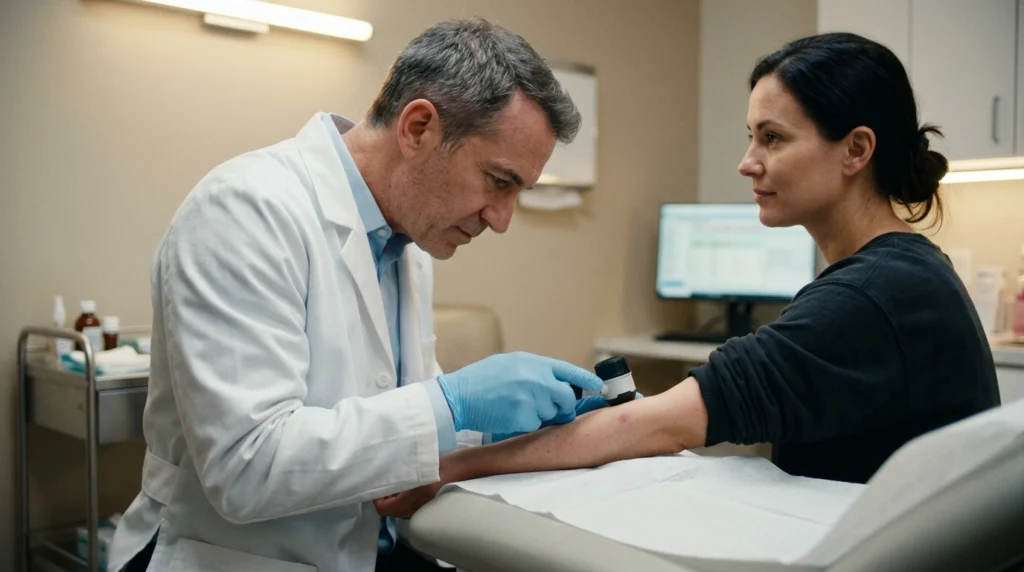
Benign skin lesions typically maintain a consistent shape and color, whereas malignant lesions often grow or change over time. Monitoring your skin for any new or evolving marks is essential for early detection and appropriate care.
- Benign skin lesions typically maintain a consistent shape and color, whereas malignant lesions often grow or change over time.
- Monitoring your skin for any new or evolving marks is essential for early detection and appropriate care.
- The ABCDE method (Asymmetry, Border, Color, Diameter, Evolving) is a helpful tool for identifying potentially malignant spots.
- Chronic skin conditions like psoriasis or eczema can alter the appearance of lesions, making professional evaluation important.
- Consult a dermatologist if you notice persistent bleeding, a sore that will not heal, or any concerning changes in a mole.
Many people notice a new mark on their skin and feel unsure about it. Recognising skin lesions early can ease worries. It also helps in getting the right care quickly. Benign growths usually stay the same shape or colour and don’t move. Malignant skin lesions, on the other hand, can grow or change. This is why it’s important to watch for any changes and seek expert advice.
Understanding Dermatology Basics
Dermatology is more than just about looks. It deals with the skin’s three layers: the epidermis, dermis, and subcutaneous tissue. Each layer has its own role in protecting us. Small lumps or spots can signal deeper problems. Being alert to sores, flaky patches, or odd marks is key. It leads to getting medical help early. This way, we can take care of ourselves sooner.
The American Academy of Dermatology says watching moles or new growths is important. Dermatologists look at size, shape, and colour of lesions. They use dermoscopy to see tiny details. This detailed method helps spot issues early and tailor treatments. It helps people understand changes in their skin. This makes them feel more at ease and hopeful for their health.
Early Signs to Monitor on the Skin
Changes in size, shape, or colour of moles can be a sign of something more. A dark spot with uneven edges might be a worry, if it’s tender or itchy. Also, a persistent bleed or a rough patch that won’t heal is a red flag. New lumps or sores could mean a bigger issue. Checking yourself in good light and a full-length mirror helps spot changes. If a sore keeps coming back, it’s time to see a doctor. The American Academy of Dermatology says catching things early is key to better results.
Having friends and family watch for signs can be a big help. They can offer support when you’re worried about spots or marks. Regular checks can make you feel more at ease and answer your questions.
Common Types of Benign Skin Lesions
Harmless moles (naevi), seborrhoeic keratoses, and lipomas are common benign lesions. They have smooth surfaces and clear shapes, unlike suspicious lumps. People often worry they might be cancerous, but their uniform colour and texture usually mean they’re safe.
Moles are small, circular spots that stay the same over time. Seborrhoeic keratoses can look dark or waxy but usually don’t need to be removed unless they bother the skin. Lipomas are soft, fatty nodules under the skin that feel gentle when touched. Seeing a doctor can help clear up any worries. It’s important to watch for changes in size or colour. Early detection is key to avoiding skin cancer complications.
Identifying Potentially Malignant Skin Lesions
Suspicious spots on the skin can seem harmless at first glance. Their uneven shape or changing colour often raises concern. The ABCDE method (Asymmetry, Border, Colour, Diameter, Evolving) offers a simple way to spot warning signs. This approach reminds individuals to watch for areas that shift in size or pigment. That focus can prompt an early diagnosis when unusual developments appear.
Family history and prolonged sun exposure heighten the likelihood of serious conditions. The Skin Cancer Foundation highlights the value of regular monitoring. This is true if persistent sores or lumps emerge. Uncertainty about a newly formed lesion may cause fear, yet prompt attention can create reassurance. Open conversations with medical professionals encourage deeper understanding during the diagnosis process. They link people to supportive resources and guide the next steps toward proper care.
The Impact of Medical Management on Skin Health
Medical management is key in keeping skin healthy, even when lesions show up. Doctors suggest using creams, removing the lesion surgically, or using specific medicines. These methods aim to lessen pain and stop problems from getting worse.
Many people find comfort by working with skilled teams. These teams check on changes and suggest the best treatments for each lesion. This advice lowers worry and boosts confidence in the healing process. But, it’s important to keep watching for small changes over time. Experts stress the importance of talking openly about risks and what to expect. They offer guidance that mixes knowledge and care, helping patients feel secure at every healing stage.
Skin Conditions and Their Influence on Diagnosis
Psoriasis, eczema, and other chronic conditions can change how suspicious lesions appear on the skin. Doctors look closely at these changes. They use a patient’s history to guide their diagnosis. Prolonged inflammation or a genetic predisposition can hide or look like serious issues. Signs like persistent redness, itching, or flaking can make it hard to tell the difference between normal and serious problems. Dermatologists use advanced methods to spot the real issues.
People with complex skin conditions often feel stressed. The fear of cancer adds to their worries. Many share their anxiety until they get a clear diagnosis. Doctors aim to provide care that fits each patient’s needs. This approach helps in accurate detection and treatment. It supports both physical and mental health, leading to better skin health and peace of mind.
Treatment Options for Benign Lesions
Benign lesions are not life-threatening but can cause discomfort or worry about appearance. Treatment options include cryotherapy, curettage, or laser removal. Cryotherapy uses extreme cold to freeze and remove unwanted growths. Curettage involves scraping away damaged tissue from raised or scaly spots. Laser treatments target growths precisely with little downtime. These methods aim to improve skin health and appearance.
Experts at Mayo Clinic advise considering personal preference, lesion size, and long-term care when choosing a treatment. It’s important to keep skin health in mind. A dermatologist can help decide if removal is needed or if it’s just for looks. Knowing that a lump or spot has been treated can bring relief. Keeping up with follow-up appointments and self-observation is key for long-term skin health.
Treatment Options for Malignant Skin Cancer
Every diagnosis brings questions and a need for reliable insights. Treatments often start with precise procedures like Mohs surgery. This method removes cancerous layers while keeping healthy skin intact. Excisional surgery might be chosen for larger tumours. It removes more tissue to ensure clear edges. Each option aims to remove the tumour while considering the patient’s quality of life.
Specialists, including a dermatologist, look at the tumour’s stage and the patient’s health. They create a treatment plan that fits the individual. Immunotherapy is gaining attention for its ability to activate the body’s defence system against cancer cells. New discoveries and improved technology offer hope. Improved surgical methods help patients get back to their routines sooner. Therapy teams understand the emotional impact of treatment. Collaboration between patients, families, and a trusted dermatologist creates a reassuring network of care. This network combines realistic expectations with genuine optimism.
Maintaining Optimal Skin Care After Treatment
New routines help nourish healing skin after medical procedures. Gentle cleansing products minimise irritation. Looser fabrics and wide-brim hats protect delicate areas from harsh rays. Sunscreen with broad-spectrum coverage shields treated spots from ultraviolet damage. This promotes healthy regeneration. Many individuals feel more at ease with daily moisturising steps.
Some experience dryness, scarring or itching that remains for weeks. Specific ointments or silicone-based dressings can ease those concerns. This allows emotional relief as well as physical benefits. It may be beneficial to seek guidance from experienced dermatology teams who specialise in holistic aftercare. Healing goes beyond the surface. An ongoing commitment to skin care fosters confidence, resilience and improved quality of life.
How to Distinguish Skin Lesions at Home
Watching for small changes on your body can help spot skin lesions early. Use a handheld mirror to see the back or behind the ears clearly. A small torch can light up unusual spots, making tiny specks or rough patches stand out. Some people take photos of moles or marks to track changes. Taking pictures every few weeks shows any shape or colour changes. This can be reassuring if a lesion looks the same or if something seems off.
Do a daily check by feeling for bumps on the scalp, neck, and arms before showering. Knowing your skin can reduce worry. It reminds you that being aware of your skin doesn’t mean you’re scared. But, if you’re unsure about a skin lesion, see a dermatologist. They can give you peace of mind with their expert advice. Knowing your own signs at home adds to your care. It helps you take action quickly and wisely for your health.
Regular Check-ups with a Dermatologist
Seeing a specialist often can catch early signs that we might miss. Dermoscopy or total body photography help spot small changes in the skin. This early detection boosts confidence in our skin care plans. Going for regular check-ups builds a strong bond with your dermatologist. You can talk openly about any skin worries. They offer advice that helps both your skin and your mind.
Getting advice from experts like those at the American Academy of Dermatology is very helpful. It gives you peace of mind, which is great for those who have had skin cancer. Regular visits become a key part of looking after your health.
Promoting Skin Health Through Preventive Care
Keeping your skin healthy starts with simple daily habits. Use sunscreen with a high SPF to protect your skin from harmful UV rays. Eating balanced meals full of vitamins and antioxidants helps your body fight off inflammation.
Regular health check-ups can spot early changes in your skin. Even small issues like dryness or rashes need attention. Drinking enough water, getting enough sleep, and using gentle skincare products are key to keeping your skin healthy. Being proactive helps reduce stress and makes talking to doctors easier. If you keep an eye on new moles or persistent skin issues, you can catch problems early. By managing your skin conditions, you build confidence in your self-care routine.
A Holistic Approach to Long-term Skin Wellness
Positive self-care lets patients heal, reflect, and take back control. It’s about caring for the mind and body through good food, exercise, and emotional support. The American Cancer Society offers trusted advice on skincare.
Skin cancer alerts us to look at health holistically. Rest, managing stress, and mindfulness help prevent cancer. Personal stories of courage show we’re not alone in this fight. Regular doctor visits are key to treatment and prevention. They encourage us to watch for new spots and discuss any changes. Taking care of our physical, emotional, and social health is key to preventing skin cancer.