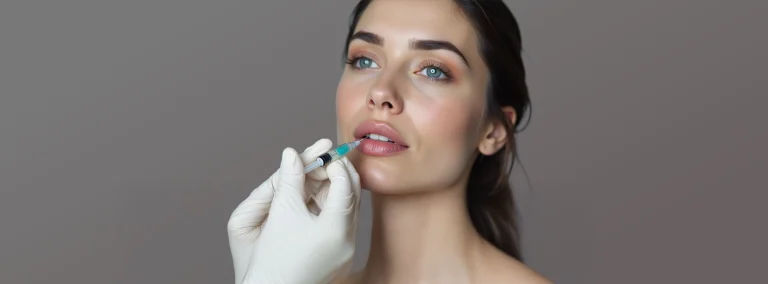
Dermabrasion removes the skin surface and part of the layer beneath with a rotating diamond or wire-brush tip so that a smoother surface regrows. It is used mainly to soften acne scars and surgical scars, is done under local or general anaesthesia in one session of about an hour and a half, and most people return to daily life after about a week.
- Dermabrasion softens scars by levelling their edges; it does not erase them.
- Shallow, sharp-edged acne scars respond best; deep pits, tethered scars and volume loss are treated first with other methods.
- Isotretinoin, cold sores, skin tone, keloid tendency and sun exposure are checked before treatment.
- The surface closes in about a week; pinkness fades over months and the skin settles around six months.
- Strict sun protection during healing reduces the risk of pigment changes.
Dermabrasion is a medical resurfacing treatment in which a doctor removes the surface of the skin and, where needed, the upper part of the layer beneath it with a fast-rotating diamond or wire-brush tip. It is used mainly to soften acne scars and surgical or injury scars. It is carried out under local or general anaesthesia, usually in a single session of around an hour and a half. Most people return to daily life after about a week, and the skin goes on maturing for about six months.
Dermabrasion Treatment: What the Procedure Involves
Skin heals from its deeper layers. Dermabrasion takes advantage of this: by removing the epidermis and, area by area, a measured part of the dermis, it lets the surface regrow at a more even level. On a scarred face, the raised edges around each depression are lowered, so scars cast smaller shadows and catch less light. Whether the treatment helps depends on how precisely the depth is matched to each scar. Too little changes nothing, and too much raises the chance of healing problems and colour change.
Dermabrasion is a different treatment from microdermabrasion, which only polishes the outermost layer and cannot reach the level where scars sit. This page is about the treatment itself: how acne scars and surgical scars are planned, what is checked beforehand, what happens on the day and how the skin heals.
Dermabrasion for Acne Scars: How Treatment Is Planned
Acne scars are rarely one type. Most faces carry a mixture of broad, sharp-edged depressions (boxcar scars), wave-like dips pulled down by fibrous bands (rolling scars) and narrow, deep pits (ice-pick scars). The classification used in dermatology was built precisely because each type responds to a different method. Dermabrasion works best on the first group and is used as a finishing step for the others.
Planning therefore usually follows a sequence:
- Active acne is brought under control first. Resurfacing skin that is still inflamed can provoke flare-ups and new scars, so treatment starts only once breakouts have settled.
- The scars are mapped. At the examination each area is assessed in angled light, because the shadow a scar casts shows its depth and edges better than direct light does.
- Deep or tethered scars are prepared. Narrow pits may be removed or raised with a small punch technique, and bands under rolling scars can be released. Depressions that come from volume loss respond better to fillers or fat injection to the face, which lift the skin from below where resurfacing cannot.
- Dermabrasion levels the surface. Once the deeper problems have been addressed, resurfacing blends the remaining edges and evens out the texture.
When acne scars cover the face, Professor Şükrü Yazar generally treats complete facial regions or the whole face rather than a single patch. Resurfacing only one area can leave a visible boundary in colour and texture between treated and untreated skin, whereas treating whole regions keeps the tone even.
Dermabrasion for Surgical and Injury Scars
Dermabrasion is also one of the finishing techniques in scar revision. It suits scars that are slightly raised, stepped or uneven at the surface, for example after an accident or an earlier operation. It can be used on its own or a few weeks after a scar has been surgically repositioned or narrowed. Timing matters. In a randomised, blinded study of facial surgical scars, half of each scar was sanded six to eight weeks after the operation. At six months the treated half looked better in 80% of patients.
Raised scars with a tendency to grow, such as keloids, are not treated with dermabrasion, because injury to the skin can make them return larger. They follow a different path built on steroid injections, silicone and carefully planned surgery. Wide or contracted scars usually need surgical revision before any resurfacing is considered.
Before Dermabrasion: What Is Checked
Most complications of resurfacing are linked to factors that can be identified in advance. The examination and medical history focus on these:
| Factor | Why it matters | Usual approach |
|---|---|---|
| Isotretinoin (acne medication) | Affects how the skin heals | Mechanical dermabrasion is not done during treatment; timing is set individually |
| Cold sores (herpes simplex) | Resurfacing can trigger an outbreak | Preventive antiviral medication |
| Skin tone and pigment history | Higher chance of darker or lighter patches | More conservative depth, sometimes a test area |
| Keloid or raised-scar tendency | New raised scars may form | Often a reason not to proceed |
| Smoking and blood thinners | Slower healing, more bleeding | Stopped or adjusted as advised |
| Season and sun exposure | New skin pigments easily | Planned outside summer |
Any change to a prescribed medicine, including blood thinners, is agreed with the doctor who prescribed it. Active infection, open sores or a cold sore outbreak in the area lead to postponement. Healing is slower in older skin, so age itself is not a barrier, but recovery is planned with more time. Areas outside the central face, such as the neck, heal less predictably and are approached with more caution.
How Dermabrasion Is Performed
Dermabrasion is performed under local or general anaesthesia, depending on the size of the area and the planned depth. The procedure itself is therefore not felt. A whole-face treatment takes around an hour and a half, and smaller areas take less.
The skin is cleaned and, if necessary, marked so that the scar edges remain visible during treatment. The doctor then moves a fast-rotating diamond tip or wire brush across the skin in short, controlled passes, unit by unit. The appearance of the skin shows how deep the treatment has reached, so depth can be adjusted from scar to scar rather than set once for the whole face. At the end the raw surface is covered with a dressing or a generous layer of ointment.
One session is usually enough. Deep or extensive scarring may benefit from a second treatment, but only after the skin has fully matured, which means waiting at least six months so that the result of the first session can be judged.
Dermabrasion Recovery Week by Week
After dermabrasion the skin behaves much like a large graze. It is kept moist, protected and untouched while a new surface forms. The timeline below describes a typical course, although the exact pace depends on depth, area and individual healing.
| Period | What the skin looks like | What to do |
|---|---|---|
| Days 1–3 | Raw, swollen, oozing; tight and sore | Keep dressing or ointment on as instructed; eat soft food |
| Days 4–7 | Crusts form and begin to separate | Do not pick crusts; men do not shave the area |
| Weeks 2–4 | Surface closed; new skin pink | Gentle cleansing, moisturiser, strict sun protection |
| Months 1–3 | Pinkness fades gradually | Daily broad-spectrum sunscreen; avoid tanning |
| Around 6 months | Colour and texture settle | Final result assessed; repeat considered if needed |
Most people return to daily life after about a week, once the surface has closed. Mild discomfort while eating or smiling is common in the first days. Small, temporary colour irregularities may appear while the new skin forms and usually even out. Once the skin has closed, a simple medical skin care routine supports the new surface. Professor Yazar’s experience is that complete healing takes around six months, and sun protection during this whole period matters more than any product.
Some signs need prompt contact with the clinic during healing:
- pain that increases instead of easing
- spreading redness, warmth or discharge
- fever
- small blisters or sores that suggest a cold sore outbreak
- areas that have not closed after the second week
Dermabrasion Side Effects and Risks
It helps to separate expected effects from complications. Swelling, oozing, crusting, tightness and pinkness are the normal stages of a controlled wound healing. Complications are less common but real. Reviews of resurfacing describe the same main group across dermabrasion, chemical peels and laser:

- Pigment changes: darker patches (often temporary, linked to sun exposure) or lighter patches (which can be lasting)
- Prolonged redness beyond the usual months of pinkness
- Infection, including reactivation of cold sores
- Milia (small white cysts) and acne flare-ups during healing
- New scarring, mainly when healing is disturbed or the treatment goes too deep
Careful selection, depth matched to the skin, antiviral protection where needed, disciplined wound care and sun avoidance reduce these risks, although they cannot remove them entirely. Because of the scarring and pigment risks, older methods such as salabrasion (abrasion with salt for tattoos) are no longer used routinely.
What Dermabrasion Can and Cannot Change
Dermabrasion softens scars; it does not erase them. In suitable skin it can make shallow scars and their edges much less visible and leave the surface smoother and more even. Deep pits, scars tethered to the tissue below and hollows caused by volume loss improve less with resurfacing alone, which is why they are prepared or treated with other methods first. Fine surface lines, such as vertical lines around the upper lip, can also respond, while deeper folds and sagging skin are not surface problems and need different treatments.
The result shows gradually. In the first months the pink colour of new skin hides the change in texture, so the outcome is judged once the skin has settled. Whether further treatment is needed is decided at that point.
Dermabrasion in Istanbul: Planning Treatment From Abroad
Professor Şükrü Yazar performs dermabrasion at his practice in Nişantaşı, Istanbul, alongside chemical peels and surgical scar revision. For visitors from abroad, a typical plan includes an examination before treatment, the procedure itself and the first week of wound care. Staying until the surface has closed makes it possible to check healing before travelling. The months that follow call for strict sun protection, which is another reason the treatment is better scheduled outside summer.
Frequently Asked Questions
Is dermabrasion painful?
The procedure is done under local or general anaesthesia, so it is not felt. Afterwards the skin is sore and tight for the first few days, much like a graze, and this is managed with pain relief and ointment.
How many sessions of dermabrasion are needed for acne scars?
Usually one. Severe or extensive scarring may benefit from a second session, which is considered no earlier than six months later, once the skin has fully matured and the first result can be judged.
How soon after surgery can a scar be treated with dermabrasion?
Surgical scars are often treated a few weeks after the operation; in one study, facial scars were sanded six to eight weeks after surgery. The timing is decided individually depending on how the scar is healing.
When can make-up be worn after dermabrasion?
Only after the surface has fully closed, which is usually after the first week or two. Covering open skin can cause irritation or infection, so the clinic advises when it is safe.
Can dermabrasion be done on dark skin?
It can, but the chance of lighter or darker patches is higher, so depth and timing are planned more conservatively and a test area is sometimes treated first. In some cases another method is a better choice.
Can dermabrasion be done while taking isotretinoin?
No. Mechanical dermabrasion is not recommended during isotretinoin treatment. The appropriate interval after stopping the medication is decided at the consultation.
References
- Dermabrasion: What Is It, Side Effects, Procedure & Benefits — Cleveland Clinic
- Dermabrasion — American Society of Plastic Surgeons
- Acne scarring: a classification system and review of treatment options — Journal of the American Academy of Dermatology (2001)
- Effectiveness of dermasanding (manual dermabrasion) on the appearance of surgical scars: a prospective, randomized, blinded study — Journal of the American Academy of Dermatology (2003)
- Recognizing and Managing Complications in Laser Resurfacing, Chemical Peels, and Dermabrasion — Facial Plastic Surgery Clinics of North America (2020)
- Isotretinoin and timing of procedural interventions: a systematic review with consensus recommendations — JAMA Dermatology (2017)
Professor Şükrü Yazar, Consultant Plastic, Reconstructive and Aesthetic Surgeon, performs dermabrasion at his practice in Nişantaşı, Istanbul; suitability is determined through an examination by Prof. Dr. Şükrü Yazar.
The information here is for guidance only and does not replace examination, diagnosis or treatment.