Malignant melanoma is a serious form of skin cancer that begins in melanocytes and can develop from an existing mole or appear as a new, unusually shaped spot. Early detection through regular skin checks and prompt medical evaluation of any changes is crucial for effective treatment and improved outcomes.
- Malignant melanoma is a serious form of skin cancer that begins in melanocytes and can develop from an existing mole or appear as a new, unusually shaped spot.
- Early detection through regular skin checks and prompt medical evaluation of any changes is crucial for effective treatment and improved outcomes.
- Risk factors include a family history of skin cancer, fair skin, and severe childhood sunburns, though melanoma can affect people of all ages and skin types.
- Treatment options may include surgical removal, immunotherapy, targeted therapy, or radiation therapy, depending on the tumor's characteristics and the patient's health.
- You should see a doctor immediately if you notice a mole that is asymmetrical, has irregular borders, changes color, grows quickly, or begins to itch or bleed.
Malignant melanoma is a serious skin cancer. It starts in cells called melanocytes. It can grow from an existing mole or appear as a new one, often with an odd shape or changing colour. Early detection is key to saving lives. If you notice any changes, like a mole growing or changing colour, get medical help fast. This quick action can lead to better treatment and more hope.
Understanding Skin Cancer and Its Relevance
In the United States, people spend a lot of time in the sun. This can weaken our skin’s defences against harmful ultraviolet rays. As a result, changes can appear on the skin’s surface. There are different types of skin cancer, including basal cell carcinoma, squamous cell carcinoma, and malignant melanoma.
Skin cancer is a common health issue globally. It affects the body’s largest organ, which faces daily environmental stress. Families often share their experiences to stress the importance of regular skin checks and using sunscreen. Experts advise being proactive, as early detection can lead to better outcomes. This approach combines awareness and action to protect our health. It helps us stay vigilant and informed about our skin’s condition.
What Is Malignant Melanoma? Key Facts to Know
Malignant melanoma is a serious skin cancer. It often starts in moles or new spots. Finding it early is key to stopping it from getting worse. A dermatologist will look at your skin closely. They might take a biopsy to confirm if it’s cancer. Scans then check if it has spread.
Experts say melanoma can grow and change quickly. If you notice any odd spots, get them checked right away. Personal stories show how important it is to ask questions and look after your health. When you get a melanoma diagnosis, you need to act fast. Getting regular check-ups can help you feel more in control. The American Cancer Society says quick action can improve your experience.
Early Warning Signs That Demand Attention
A suspicious patch on the skin can suggest unexpected changes. If one side of a mole looks different from the other, or it grows quickly, it might be a sign of melanoma. Look out for irregular borders, like edges that feel rough, and darker colours or mixed shades. Constant itching, bleeding, or a new lump could mean melanoma symptoms that need quick action. The ABCDE guide—Asymmetry, Border, Colour, Diameter, and Evolving—helps spot when a mole needs extra care. If a mole changes shape, shade, or feel, it’s a red flag. Checking yourself regularly can help. If you notice anything odd, see a doctor right away. Early advice from a healthcare provider can offer peace of mind and clear up any worries.
Tracking Melanoma Symptoms Over Time
Melanoma can change quickly, even when early signs seem small. Some people notice changes in size or colour in just weeks. This calls for urgent visits to the doctor. Experts at the American Academy of Dermatology suggest regular self-checks. This helps spot small changes in moles or spots on the skin.
Feeling worried about changes is normal. But, getting help can really help. Early treatment can lead to good results, so it’s wise to watch for any unusual signs. Healthcare teams are working hard to find new ways to treat melanoma. They use the latest drug therapies. Keeping an eye on changes and acting fast is key. Every visit or test helps catch problems early.
Examining Melanoma Risk Factors
Higher risk often comes from a mix of inherited and environmental factors. A family history of skin cancer can show genetic predisposition. This means people should watch for any unusual skin lesions. Those with fair skin are more at risk because they have less natural defence against harmful UV rays. Severe sunburns in childhood can also raise the risk of abnormal cell growth. This is why it’s important to be careful when spending time in strong sunlight.
Age is a factor, but it’s not the only one. Young people can also be at risk. Knowing about genetic signs can make people worried, but early skin checks and protective habits can help a lot. By learning about personal risk, people can make changes in their daily life. This might include wearing hats or using sunscreen with a higher SPF. Understanding these factors can lead to better prevention and a healthier future.
Melanoma Diagnosis: Essential Techniques
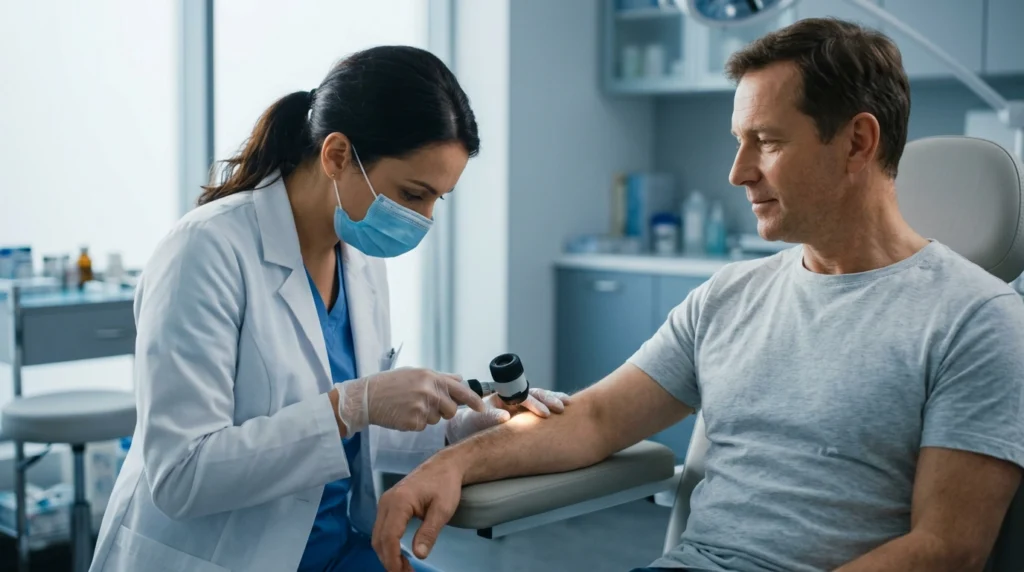
Doctors use a special tool called dermatoscopy to look at moles closely. They look for patterns and colour differences. If a mole looks odd, they take a skin biopsy. Pathologists then examine the tissue under a microscope. They look for cancer cells early on. Sometimes, MRI or CT scans are used to check for tumours deeper in the body.
These methods help find melanoma early. Early detection means better treatment chances. The American Academy of Dermatology says being aware of skin changes is key. Regular check-ups and protecting against UV rays are important. This helps prevent melanoma. It encourages people to be proactive about their skin health.
Melanoma Treatment Options and Considerations
Surgical removal is often the first step to stop tumour growth. Small lesions can be removed with great precision, helping to keep healthy tissue intact. For bigger growths, more complex surgeries might be needed. A team of specialists will plan carefully, taking into account the patient’s health and the tumour’s nature.
Immunotherapy can help the body fight cancer cells more effectively. Targeted therapy focuses on specific genetic markers to kill cancer cells without harming healthy ones. Radiation therapy is used when other treatments fail or when the tumour is hard to reach. Knowing about these options helps patients feel more in control, linking directly to malignant melanoma awareness. Talking regularly with oncologists can ease worries and help make informed decisions. This approach respects each person’s unique needs, showing the value of ongoing support for both physical and emotional health.
Melanoma Prognosis and Long-Term Outlook
Acting quickly can make a big difference. Thin tumours often respond well to treatment, which improves survival chances. But, the tumour’s thickness, genetic mutations, and UV exposure can change how well someone recovers. Some people’s immune systems fight off cancer well, but others face more challenges. This depends on how strong their immune system is.
Those who tackle melanoma risk factors early can see big benefits. They get caught up in cancer sooner and get better care. New treatments like immunotherapy and targeted drugs offer hope when old treatments don’t work. Doctors say that having emotional support is key. Families and caregivers play a big role in helping people stay healthy. They encourage changes that slow down the disease.
Researchers from the American Cancer Society are always looking for new ways to fight cancer. This brings hope to those who thought their situation was hopeless. Regular check-ups help doctors improve treatment plans. By focusing on melanoma risk factors, people can live better lives. They can stay mentally strong and look forward to a brighter future.
Lifestyle Advice to Complement Medical Care
Living well can help when facing malignant melanoma. Try brisk walks or gentle stretches to boost strength and energy. Eating nutritious meals with fresh veggies, lean proteins, and whole grains also aids recovery. Protect your skin from the sun with hats, long sleeves, and sunscreen. Choose a high SPF sunscreen, as advised by the American Cancer Society. This helps shield your skin from harmful rays.
Reducing stress is key. Mindful meditation or journaling can offer emotional comfort during tough times. Talking to loved ones and your healthcare team can also help. Small, healthy choices can make a big difference. They remind us that we have control over our health and well-being. Always check with your doctor before making big lifestyle changes.
Melanoma Prevention Strategies for Better Skin Health
Regular check-ups and mindful habits are key to preventing future skin issues. Many families schedule routine skin exams to boost confidence. These exams help spot subtle changes early. A licensed dermatologist can check moles and blemishes, giving peace of mind or starting treatment if needed. Daily self-checks can help too, guiding people to get care on time.
A balanced lifestyle with protective measures is important for overall wellbeing. Using broad-spectrum sunscreen protects vulnerable areas from harmful rays. Wide-brimmed hats and light clothing offer extra protection in warm weather. This approach helps lower the risk of skin cancer and keeps skin hydrated and strong. Simple steps, done often, can reduce risk and encourage everyone to stay vigilant on their health journey.
Shining Light on Malignant Melanoma Awareness in the United States
Public health campaigns focus on skin checks and sun safety. The American Cancer Society runs education programmes. These guide people from the first signs to treatment. Community stories show the emotional impact of a diagnosis. Families share their experiences, giving comfort to others. This openness helps more people get checked early. Nationwide efforts highlight the importance of self-examinations and doctor visits. Local groups provide resources and promote healthy habits. This approach helps reduce fear and encourages early action.
Challenging Common Skin Cancer Misconceptions
Many believe skin cancer hits only older people who spend a lot of time in the sun. But, the truth is, melanoma symptoms can show up in people of all ages and skin types. Even hidden spots, like the scalp or soles of the feet, might have subtle changes that need watching. Some think cancerous moles always hurt or itch. But, it’s possible for painless spots to be dangerous. Getting them checked by a doctor early on can save lives. Early treatment can stop cancer from spreading. Unusual growths in unexpected places remind us to check our skin regularly. By doing self-exams and knowing the signs of melanoma, we can take care of ourselves. Getting a doctor’s opinion when we notice something odd gives us peace of mind.
Moving Forward with a Protective Mindset
Being alert to changes in moles and new skin spots is key to saving lives. Regular visits to skin health experts boost confidence. Emotional support is vital during melanoma treatment, found in patient groups and online forums. Making healthy lifestyle choices strengthens the skin. Eating well, wearing protective clothes, and being careful in the sun are important. This approach helps manage worries and keeps hope alive. Building trust with doctors and seeking second opinions is reassuring. Being proactive and talking openly with healthcare professionals leads to better results. Staying informed about new treatments gives people the power to ask smart questions. Everyone can protect their health and aim for long-term success.