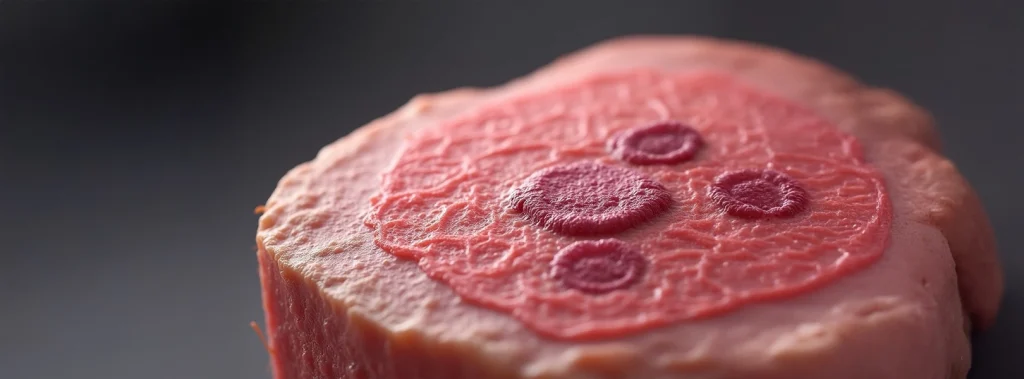
Squamous cell carcinoma is a common type of skin cancer that develops in the outer layers of the skin, typically in areas heavily exposed to sunlight. Treatment depends on the tumor's size and location, often involving surgical removal, scraping, or targeted therapies to eliminate the cancer cells.
- Squamous cell carcinoma is a common type of skin cancer that develops in the outer layers of the skin, typically in areas heavily exposed to sunlight.
- Treatment depends on the tumor's size and location, often involving surgical removal, scraping, or targeted therapies to eliminate the cancer cells.
- People with fair skin, weakened immune systems, or a history of severe skin injuries face a higher risk of developing this condition.
- Doctors diagnose the cancer by examining the affected area and performing a biopsy, sometimes using imaging scans if the tumor is high-risk.
- You should seek medical evaluation if you notice a hard, bleeding lump, a scaly red patch, or a wound that does not heal.
squamous cell skin cancer
Cancer that develops in the squamous cells that make up the middle and outer layers of the skin is called squamous cell carcinoma or squamous cell cancer. A common type of skin cancer, squamous cell carcinoma, or cutaneous squamous cell carcinoma, can be described as the second most common form of skin cancer. Squamous cell carcinoma begins in the epidermal cells, the outer layer of the skin, and most often occurs in areas of the skin that are heavily exposed to sunlight, such as the hands, arms, ears, face, legs, mouth, and the bald spot on the top of the head. In addition, squamous cell carcinoma can occur in areas such as mucous membranes and genitals.
What causes squamous cell carcinoma?
Continuous exposure to ultraviolet rays from the sun or tanning beds is the primary cause of squamous cell carcinoma. People with fair skin, hair, and eye color have a higher risk of developing squamous cell carcinoma. Other factors that can cause squamous cell carcinoma include:
- Blood or bone marrow cancers, chronic infections such as HIV, chemotherapy, or immunosuppressive drugs, including various biological drugs, can all impair the immune system.
- Having undergone an organ transplant,
- The presence of skin injuries such as wounds, burns, ulcers, and areas of skin previously exposed to X-rays or chemicals,
- The presence of a genetic disorder called Xeroderma Pigmentosum, which requires sun avoidance because the skin cannot repair itself.
What are the signs and symptoms of squamous cell carcinoma?
The skin changes that constitute the signs and symptoms of squamous cell carcinoma (SCC) can be listed as follows:
- A hard lump or growth that can crust over and cause bleeding,
- A scaly, smooth, red piece of leather,
- A growth that is higher than the skin’s surface but has a depression in the middle,
- A wound that doesn’t heal, or a wound that heals but then recurs.
- Actinic keratosis is a precancerous growth that can feel like a dry, scaly, itchy, or discolored lump or bump.
- A precancerous condition called leukoplakia, in which white patches appear in the mouth, gums, tongue, or cheeks,
- Actinic cheilitis is a skin lesion that primarily appears on the lower lip, causing the tissue to become dry, pale, and cracked.
The process of diagnosing and treating squamous cell carcinoma.
Diagnosis of squamous cell carcinoma begins with an assessment of the affected area, considering factors such as size, whether the borders are poorly or clearly defined, and location, including whether the tumor is on the site of a previous injury. A biopsy is taken and examined under a microscope. If a high-risk tumor is suspected, imaging scans may be used to determine if nearby lymph nodes are involved or if the tumor has invaded other tissues in the area.
Treatment for squamous cell carcinoma is determined on a case-by-case basis, considering factors such as the patient’s overall health, age, location of the cancer, and how invasive it is. Possible treatment options include:
- In curettage and electrodescanning procedures, scraping with a curette is performed, followed by cauterization with an electric needle.
- Surgical methods can be performed using Mohs surgery or excisional surgery. In Mohs surgery, a specialized technique, the visible cancer is removed by cutting along its edges. During surgery, the tissues are examined to ensure no cancer cells remain in the surrounding tissue, and if necessary, a flap or skin graft may be considered to aid wound healing. In excisional surgery, the skin tumor and a portion of the surrounding healthy skin are removed.
- Cryotherapy,
- Chemotherapy,
- Laser,
- Photodynamic therapy, or PDT,
- Radiotherapy.