Malignant melanoma treatment depends on the cancer's stage and the patient's health, often involving surgery, immunotherapy, or targeted drugs. Early diagnosis through skin checks is crucial, as it can catch cancer cells before they spread and improve recovery chances.
- Malignant melanoma treatment depends on the cancer's stage and the patient's health, often involving surgery, immunotherapy, or targeted drugs.
- Early diagnosis through skin checks is crucial, as it can catch cancer cells before they spread and improve recovery chances.
- Targeted therapies focus on specific genetic mutations to block cancer growth, while immunotherapy boosts the body's natural defenses to fight the disease.
- A holistic approach that includes nutrition, stress management, and emotional support can help manage treatment side effects and improve overall well-being.
- Regular check-ups and self-examinations are essential for monitoring skin health and catching any signs of relapse early.
Learning about malignant melanoma treatment can be scary. It’s a big change that makes people wonder about the best medical options and support. Doctors say that surgery, immunotherapy, or targeted drugs are key in treating this cancer. The choice depends on the cancer’s stage and the person’s health. But, patient support is also important in making these decisions. Survivors often say knowing what’s happening helps them feel in control and hopeful. This guide aims to give clear, honest advice. It’s for those looking for a balanced approach to care, to help them stay optimistic.
Why Early Diagnosis of Melanoma Matters
Melanoma can start with a small change on the skin. But, this small change can mean a lot. Going to see a dermatologist or doctor quickly helps check moles that might be cancerous. This early check can catch cancer cells before they spread.
Mayo Clinic says early detection reduces treatment risks and improves chances of recovery. Doctors can then suggest the best treatments for each person. These might include small surgeries, less harsh drugs, or care that keeps daily life as normal as possible. Everyone should have a chance to fight cancer. Early action leads to better treatment options and a stronger future.
Understanding Malignant Melanoma Treatment Pathways
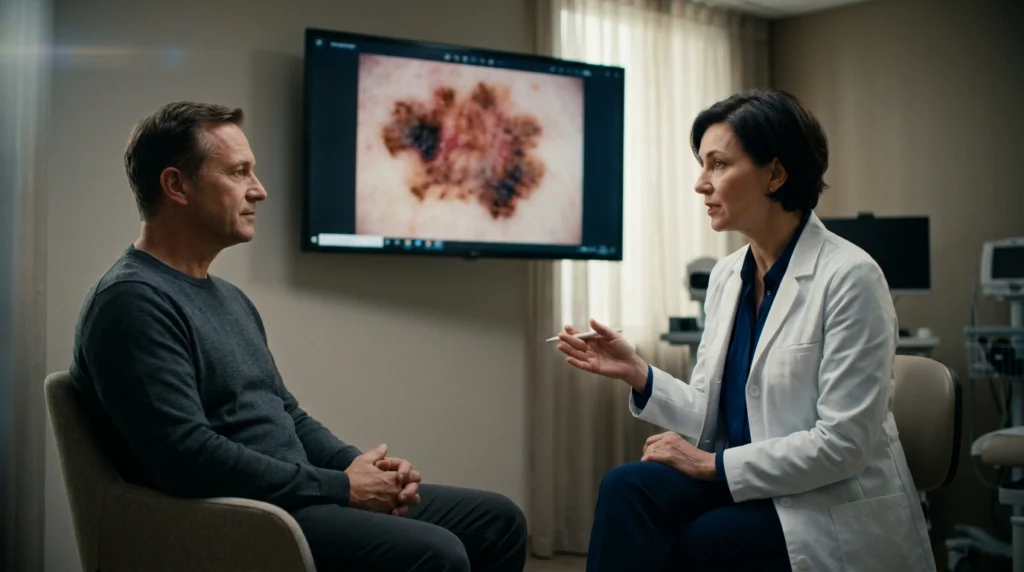
Treatment plans start with a biopsy and a look at the stage of the disease. Doctors check if the cancer is just in the skin or has spread. A team of experts, like dermatologists and radiologists, work together to create a treatment plan that fits each patient. Some patients might feel worried during these talks. But, talking openly can help ease their fears. It helps them make choices that feel right for them.
When treatment gets more intense, new options come into play. This might include medicines that target cancer cells or boost the immune system. Doctors carefully consider the good and bad sides of these treatments. Clinical trials can also be part of the treatment plan. They offer a chance to try new treatments. Regular check-ups and making decisions together help patients feel more in control of their health.
Skin Cancer Therapy: Key Considerations
Everyone faces skin cancer in their own way. Medical teams, including experts from the National Cancer Institute, offer a range of advice. They consider where the tumour is and the patient’s health. They might suggest radiation, topical treatments, or surgery. Managing side effects like fatigue or swelling is key. Healthcare teams keep a close eye on these. They also focus on the patient’s emotional well-being, sometimes through counselling or support groups.
Personal choices play a big role in treatment plans. Some patients seek a second opinion before starting. This helps them find a treatment that suits them. Making lifestyle changes, like eating well and managing stress, is also important. These steps help protect overall health. They combine medical advice with care and understanding.
Melanoma Surgery Options for Different Stages
Local excision is often chosen when melanoma is detected early. Surgeons remove the tumour with a safety margin of healthy tissue. This helps reduce the chance of further spread. This method supports quicker recovery. It is guided by a gentle approach to incision and closure.
Wider excision may be suggested for larger lesions when a minor procedure is not sufficient. A pathologist examines the removed tissue, confirming if the margins are clear. This practice boosts confidence in the long-term outcome. Advanced cases may require lymph node dissection if cancer cells have spread. This approach can limit future complications. It is sometimes paired with targeted therapy for melanoma to address lingering cells. Many patients rely on supportive treatments that promote healing. These treatments reduce discomfort and restore hope.
Targeted Therapy for Melanoma: How It Works
This method targets the genetic factors that make melanoma cells spread. It looks at mutations like BRAF or MEK, found through personalised tests. By tailoring treatments to each mutation, doctors pick drugs that stop cancer growth signals.
Targeted treatments differ from immunotherapy for melanoma. Targeted treatments block specific cancer pathways. Immunotherapy, on the other hand, boosts the body’s natural defences. Both aim to slow disease growth and enhance life quality. Some targeted medicines can cause side effects, like skin sensitivity or digestive issues. Talking openly with healthcare providers helps track symptoms and adjust treatments as needed. With proactive care, patients can hope for better results and improve their physical and emotional health.
Immunotherapy for Melanoma: Harnessing the Body’s Defence
Immunotherapy boosts the immune system to fight melanomas. It uses checkpoint inhibitors like pembrolizumab or nivolumab. These drugs help T-cells attack cancer cells more effectively. This method makes the body better at spotting and fighting harmful growths. It offers hope to those looking for a treatment that feels natural.
Researchers are looking into how immunotherapy works alone and with other treatments. Some people see better results when combining it with other therapies. This approach gives patients a sense of security, knowing their body is fighting back. The hope for long-term remission is high. It shows that new and better treatments are always being developed.
Combination Treatments for Melanoma: Maximising Efficacy
Using different treatments together can help fight cancer cells more effectively. Immunotherapy and targeted drugs work together to kill tumours without harming healthy tissue. Sometimes, chemotherapy is added, but this depends on the person’s health.
Genetic data is used by some doctors to plan the best treatment. This includes combining therapies. The National Cancer Institute is leading research into new drug combinations for melanoma. These studies aim to improve treatment success and reduce side effects. Many doctors now see combining treatments as a good way to fight cancer. Talking to a doctor can help find the right treatment plan for you.
Advanced Melanoma Care: Moving Beyond Standard Protocols
Teams at top centres like the American Cancer Society tailor care for each patient. They use precision medicine with radiation or surgery. This targets cancer cells while keeping healthy tissue safe.
Some patients get a holistic treatment plan. This includes meditation, nutrition, and gentle exercise. It helps them feel in control, reducing anxiety and fatigue. Stories from survivors show the power of emotional and spiritual support during tough times. New pain relief methods, like nerve blocks or non-opioid options, improve comfort. This goes beyond just removing tumours. Looking at the mind’s role also supports a whole-person approach. It makes patients feel more hopeful about their future.
Exploring Melanoma Clinical Trials: Opportunities and Insights
Clinical trials give patients a chance to try new treatments. It might seem scary to join studies with new methods. But many find the benefits are worth it, thanks to extra medical support. Teams closely watch each study, ensuring safety and progress. This can give volunteers a sense of purpose. They help shape the future of melanoma treatment.
Doctors help decide if a trial is right for each patient. Knowing the risks and benefits helps make informed choices. This way, patients can make decisions that feel right for them. Looking for trials through trusted sources like the National Cancer Institute or ClinicalTrials.gov is a good idea. This research helps find the best fit. It brings hope that together, we can make progress in fighting melanoma.
Lifestyle Adjustments to Support Skin Health
Using sunscreen with a high SPF is key during the day. Wearing protective hats or clothes covers sensitive spots. Going inside when it’s too sunny helps your skin. Using gentle soap and moisturiser keeps your skin elastic and soft. These small steps help you feel in control. They show that treatment plans and daily choices go hand in hand.
Eating balanced meals with lots of fresh fruits and veggies is important. They give your body the nutrients it needs for repair and to fight off sickness. Drinking plenty of water keeps your skin cells hydrated. Practising mindfulness, like deep breathing or short walks, can help reduce stress. A calm mind helps your skin heal better. This can improve your overall health and well-being. Regular visits to healthcare professionals give you peace of mind. They help you catch any changes early. Making small changes each day can lead to big improvements in your skin health.
Holistic Approach to Melanoma Treatment
Melanoma therapy that looks at body, mind, and spirit can offer new hope. Medical plans are important, but extra help from mental health experts, nutritionists, and rehab teams makes a big difference. This mix helps people deal with side effects and emotional issues, leading to a better recovery.
Experts in integrative care make plans that help with fatigue, stress, and diet problems. They suggest balanced meals and gentle exercises to boost the body’s strength. Support from counsellors also helps, making people feel better and more positive. It shows that every part of life is valued and cared for. A program that looks at the whole person can make people stronger. Small changes in lifestyle, guided by experts, save energy and improve mood. This approach shows the strength of combining medical care with caring support.
Addressing Relapses and Ongoing Monitoring
Many people worry about melanoma coming back. But, this worry doesn’t undo the progress made. Regular check-ups are key to staying safe. Getting your skin checked and having scans is important. It helps doctors catch any signs of cancer coming back early.
Checking your skin yourself is also important. Spotting new spots or growths means you can get help fast. If cancer does come back, there are treatments that can help. Doctors work with you to find the best way to treat it. Knowing what to do and acting quickly helps keep you safe. This way, fear turns into a manageable worry. It gives you the strength to keep going and stay hopeful.
Understanding Possible Side Effects of Therapy
Treatments for melanoma can affect both body and mind. Fatigue can make simple tasks hard. Skin irritation adds to daily discomfort. Nausea or stomach problems can affect eating and drinking. These issues can make people worry more and feel stressed.
Healthcare support is key during this time. Doctors can adjust treatments if needed. Family and friends help with meals and rest, showing they care. Dealing with emotional stress is as important as physical challenges. Gentle activities like walking or relaxation can help. Talking to mental health experts or joining support groups also helps. These steps can help regain control and improve outlook. They are important on the road to recovery.
Navigating Insurance and Financial Considerations
Before, during, and after treatment, hidden costs can add up. These include medication prices, lost wages, and procedures not covered by insurance. Families already dealing with physical and emotional challenges face extra stress. Talking to insurance reps can help. Social workers or financial advisors might find benefits that reduce costs. This can ease the financial burden and stress.
Some clinics work with local nonprofits and grants to help with costs. They offer payment plans that fit into monthly budgets. This way, patients don’t face huge bills all at once. The American Cancer Society is a great resource for finding subsidised services. It helps communities access essential care. Discussing with medical teams can reveal discounts or state-funded healthcare options. Families might find ways to cover procedures and medication. This reduces worry and lets patients focus on recovery. Looking into financial strategies is a key part of care. It offers peace of mind during a tough time.
Empowering Patients and Caregivers Through Education
Hope and knowledge are key when dealing with tough medical choices. Understanding medical terms, test results, and possible side effects makes people feel more ready for doctor visits. This understanding leads to working together, not just following doctor’s orders.
Support groups, online or in person, are essential for sharing and empathy. They help people feel less alone. By learning to read test results and ask smart questions, individuals gain confidence and speak up without fear. Learning and emotional support can lead to taking action with confidence. Looking at hospital websites or trusted cancer organisations can provide a wealth of information. Every new piece of knowledge builds self-awareness and strengthens support networks, giving direction and motivation.
Looking Towards a Brighter Future
Melanoma research is growing, leading to better treatments. Doctors and scientists share their findings globally. This helps build a strong base for new discoveries. Patients get strength from new ways to protect themselves, like regular skin checks. They also find support in their families. This reminds them they are not alone.
New trials and methods are improving survival chances. This journey helps people grow and adopt healthy habits for life. Advances in care bring more help to those in need. Support groups, clinics, and community events offer comfort. This unity brings hope, showing a brighter future for melanoma patients.