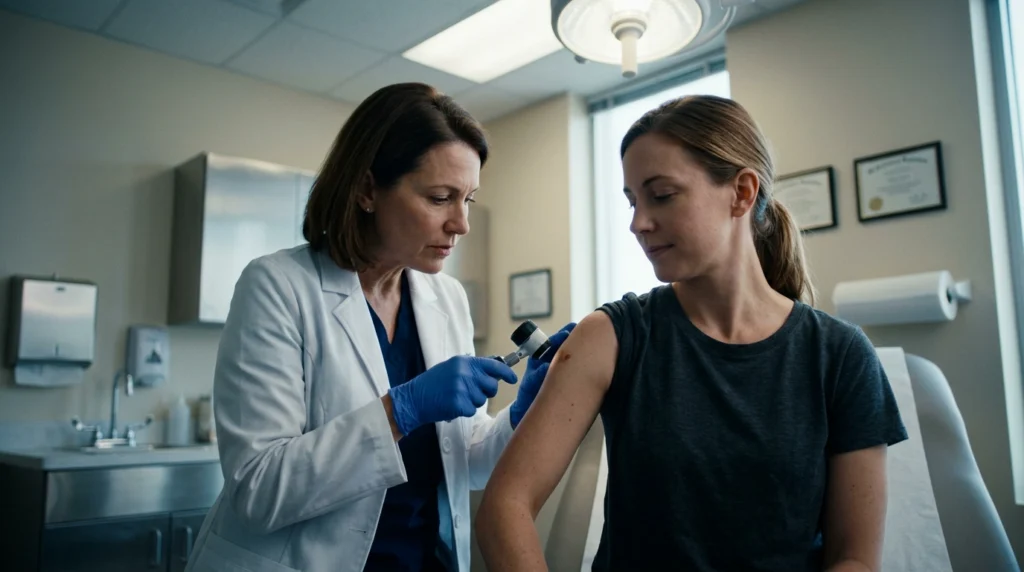
Melanoma is diagnosed through a combination of visual skin checks, dermoscopy, and a biopsy to confirm the presence of cancer cells. If melanoma is found, doctors may use imaging and blood tests to determine the stage and plan the most effective treatment.
- Melanoma is diagnosed through a combination of visual skin checks, dermoscopy, and a biopsy to confirm the presence of cancer cells.
- If melanoma is found, doctors may use imaging and blood tests to determine the stage and plan the most effective treatment.
- The ABCDE rule (Asymmetry, Border irregularity, Colour changes, Diameter over six millimetres, and Evolving nature) helps identify suspicious moles.
- Different types of biopsies, such as punch, excisional, or incisional, are used depending on the size and location of the suspicious spot.
- See a dermatologist if you notice a mole getting darker, changing size, or if you have a family history of skin cancer.
Melanoma can start quietly or show signs that worry people. Doctors focus on early detection to find cancer cells quickly. This helps ease the worry about skin changes. At places like Cancer Research UK, experts say to watch for unusual moles or lesions. A quick diagnosis tells if cancer is there. It also shows the next steps in treatment and gives hope to those waiting anxiously. Understanding what’s happening can help people feel more in control and ready for treatment.
Why Early Detection Matters
Melanoma grows quickly, catching many off guard. Catching it early can change the treatment needed. Early detection gives the best chance to stop it from spreading. The Skin Cancer Foundation says to watch for any mole or spot changes. Actor Ewan McGregor had a suspicious growth removed early. This shows that anyone can be at risk, no matter their lifestyle or age. Regular self-checks help track new freckles or changing marks. Dermatologists suggest regular visits for any unusual skin spots. Early detection is all about regular checks and quick action. Many skin cancers can be treated well if caught early. A small skin check could lead to a better health outcome. It also brings peace of mind.
Skin Cancer Screening Methods
Many people get a visual check from a dermatologist for peace of mind. A detailed skin cancer screening can spot possible issues. Dermoscopy helps see deeper features that might show an abnormal growth. How often you need a check-up depends on your risk factors. If you have a family history or spend a lot of time in the sun, you might need to go every year. Others might go less often, based on what their dermatologist says.
The American Academy of Dermatology gives advice on how often to get checked. These regular visits help find problems early. They also give you peace of mind. Checking your skin at home between visits is also important. If a mole gets darker or changes size, it’s a sign to see a doctor. Getting tips on how to check yourself helps bridge the gap between professional screenings. Finding problems early can save your skin and give you peace of mind.
Recognising Moles and Skin Lesions
Seeing unusual skin changes can make us worried. A persistent itch or a sudden bump might make us think about moles. Most moles are harmless, but watching their shape and colour can ease our minds. Small changes in how a mole looks might mean we need to check it more closely. This is important for our health and feeling confident.
Spotting odd spots starts with the ABCDE rule: Asymmetry, Border irregularity, Colour changes, Diameter over six millimetres, and Evolving nature. Each letter points out small signs that could mean trouble. A mole with uneven edges or changing colours might need a doctor’s look. Getting a mole checked early can tell us if it’s serious or not. It helps us act fast and keep our skin healthy.
Diagnostic Tests for Melanoma
Confirming melanoma often needs more than just looking at the skin. Doctors start with a dermoscopic assessment, which zooms in on skin details. Some places use mole mapping, taking photos to track changes over time. Pathologists then examine the tissue to see if it’s cancerous or not. These tests are key to making sure the diagnosis is right. They help doctors choose the best treatment plan.
Some people worry about these tests. But they are important for understanding the situation. At Memorial Sloan Kettering Cancer Center, experts say these tests can spot cancer early. This leads to treatments that fit each person’s needs. These tests take time and patience, but they help clear up what’s next. When the results are clear, doctors can make better choices for treatment.
Understanding Melanoma Diagnosis
Doctors look at biopsy results to see how far a tumour has spread. Some people find out their melanoma is “in situ,” meaning it’s only in the outer skin layers. Others learn it’s “invasive” or “metastatic,” showing it has spread deeper.
These findings come with a stage that helps decide treatment. Stage I might mean the tumour is small and contained. But higher stages show it has spread beyond the skin. Each stage brings its own questions about treatment and what to do next. Doctors explain these terms to help patients feel more in control. This knowledge lets families talk about care plans with doctors. It helps them move forward with confidence.
Why Biopsy Melanoma Is Essential
A biopsy can tell if skin changes are due to melanoma. There are different types of biopsies, each for a specific reason. A punch biopsy takes a small tissue sample. An excisional biopsy removes the whole spot, while an incisional biopsy takes a part of a bigger growth.
Some people worry about pain. But, local anaesthetic or gentle sedation can make it less uncomfortable. After the biopsy, pathologists check the sample in a lab for cancer cells. This is key for planning treatment quickly. Getting the results of a biopsy melanoma test is important. It helps both patients and doctors know what to do next. Knowing the truth quickly means better care and less worry about skin cancer.
Skin Lesion Assessment Techniques
Dermatologists use tools like magnification and digital devices to check out spots. They look for changes in size, shape, and colour. With confocal microscopy, they get detailed images under the skin’s surface. This method shows small details that regular methods miss. It helps doctors understand the risks better. It also makes people feel better about their skin marks.
Many clinics use new ways to check skin lesions. This helps doctors know if a mole is safe or not. People often feel relieved when they know what’s going on with their skin. New imaging techniques help clear up doubts. They make patients more aware of their skin. This is key for spotting problems early and building trust in doctors.
Role of Imaging in Melanoma
Ultrasound, CT scans, and PET scans help doctors see what’s happening under the skin. They show where cancer might have spread. Places like hospitals use top brands like Siemens and GE for clear images.
These scans help doctors see if cancer has reached lymph nodes or other organs. This info helps plan the best treatment for each patient. Getting ready might mean using dyes or fasting briefly, but it’s usually not painful. Many patients find these scans help them feel less worried. They can see if anything changes over time. These methods help doctors catch problems early. They work best when a doctor is involved. Imaging is key in keeping patients safe and informed.
Laboratory Tests and Their Relevance
Blood tests can show signs of hidden health issues. They look at markers like lactate dehydrogenase (LDH) when melanoma is suspected. If LDH levels are off, doctors might look into body chemistry changes. These tests don’t prove cancer alone. But, they can spot early warning signs for more tests.
Lab tests track enzymes, proteins, and biomarkers to spot small changes. Doctors compare these to past results to see if there’s a trend. This could mean looking into tumours or imbalances. Spotting these early helps doctors suggest early action. This might include more scans or checking suspicious spots. This approach combines medical data with care, helping people feel more confident about their health.
Challenges in Detection and Diagnosis
Melanoma can look different from what we expect, making it hard to spot early. Some spots seem harmless and can blend in with freckles or childhood marks. This can lead to people missing changes until they’re more obvious, which can delay getting help.
It’s possible to miss or confuse a suspicious spot with something harmless. This is a problem worldwide, as many clinics struggle with not enough dermatologists. People might have to wait a long time to see a specialist. Being proactive and regular screenings are key to overcoming these challenges. The American Cancer Society recommends everyone gets checked regularly. New tools, like handheld devices, help find hidden signs and get results faster. This helps reduce worries and gives hope to those concerned about melanoma.
When to Seek a Second Opinion
Many people feel unsure after hearing a complex diagnosis. This isn’t a sign of doubt but a key step towards getting it right. A new doctor’s view can spot things missed before and confirm test results, like in melanoma or cancer cases.
Health is very important, and families should look at all options. Talking to different doctors might show new treatments or options that fit better. This can make people feel less stressed and build trust. Some think asking another doctor might upset their current team. But, respected doctors see the value in these talks. Getting different views can lead to new treatments and better decisions. It’s good to remember that working together with doctors and loved ones builds confidence and hope.
Preparing for a Dermatology Appointment
Booking a specialist appointment can be nerve-wracking. Keeping a symptom diary helps track changes, like constant itching or strange growths. Writing down your current medications and past treatments makes things clearer during the visit. Having a list of questions ready helps calm your nerves. It ensures you cover all important topics with your dermatologist.
Family history is key. Mentioning any skin cancer in your family helps the dermatologist assess your risks. Organising your medical records and past test results makes the conversation easier. A few deep breaths or a short walk can help lower your stress levels. Talking openly about your symptoms and lifestyle is empowering. This helps the dermatologist give you the best advice. It might lead to early detection and treatment, protecting your health.
Next Steps After a Positive Diagnosis
Getting a positive melanoma test can be scary. But, knowing what’s next can help. Doctors use scans and reports to figure out the tumour’s stage. They then plan a treatment that might include surgery, immunotherapy, or radiation.
Talking to your care team is key. They help you understand your options and their effects. Family and friends are also important for support. If you need more help, counselling can ease your worries. Organisations like the American Cancer Society and the National Cancer Institute offer help. They share information on new treatments. Meeting others who have gone through this can also give you hope. Knowing more and feeling supported can help you feel more in control.
Staying Proactive for a Healthier Future
Being careful about skin cancer can really help. Regular visits to a dermatologist and checking your skin yourself are important. Also, protecting your skin from the sun is key. New treatments are being found that help people live longer and feel better. Getting quick medical help and having a caring team can make a big difference. Every test or biopsy helps you understand your risk better.
This brand focuses on teaching, caring, and helping patients. Wearing the right clothes, staying healthy, and watching for skin changes are all important. We thank everyone who stays alert, gets advice on time, and hopes for new discoveries. By working together and being kind, we can build a strong community. A brighter future is possible when we use our knowledge and courage.