Nipple aesthetics involves cosmetic surgical procedures designed to correct various issues with the nipple and the surrounding areola, such as inversion, enlargement, or absence. These procedures can be performed alone or combined with other breast surgeries to improve symmetry and appearance.
- Nipple aesthetics involves cosmetic surgical procedures designed to correct various issues with the nipple and the surrounding areola, such as inversion, enlargement, or absence.
- These procedures can be performed alone or combined with other breast surgeries to improve symmetry and appearance.
- Techniques vary depending on the specific issue, ranging from freeing shortened milk ducts for inverted nipples to using skin grafts or medical tattooing for areola reconstruction.
- Care is taken during surgery to preserve the milk ducts whenever possible, especially when reducing the size of large or prominent nipples.
- While generally safe, potential risks include infection, bleeding, and temporary loss of sensation, highlighting the importance of consulting an experienced cosmetic surgeon.
Nipple aesthetics refers to cosmetic surgical procedures performed to address various problems in the nipple and the surrounding brown area called the “areola.” Nipple aesthetic surgeries can be combined with other breast aesthetic surgeries such as breast augmentation, breast reduction, and breast lift, if needed.
Nipple aesthetics can be performed to correct problems such as inverted, sunken, wide, or large nipples, as well as to create a nipple where none exists. Thus, deformities and other problems in the nipples can be resolved.
Aesthetic problems in the nipple can result from congenital factors, genetic factors, various infections, developmental reasons, burns, accidents, and cancer. There is also a risk of developing some nipple deformities due to breastfeeding.
Factors that cause the brown areola surrounding the nipple to enlarge can also lead to the breast tissue losing its characteristic form and deformities in breast shape. While the areola is more prominent in women with darker skin tones, it is possible for the areola to have different color tones due to hormonal changes.
How is Nipple Aesthetics Performed?r?
Inverted nipples, also known as sunken nipples, are a condition caused by shortened milk ducts during development, resulting in the nipples being pulled inward. The severity of this problem can be graded depending on how short the milk ducts are.
For patients experiencing inverted nipples, nipple aesthetics can be performed simultaneously with breast reduction, augmentation, or lift procedures. If the patient has inverted nipples but no other breast tissue problems, nipple aesthetics alone may be considered.
To correct inverted nipples, the milk ducts that pull the nipples inward are freed, and care must be taken to avoid damaging the ducts. Depending on the severity of the problem, it may be necessary to place fat tissue under the nipples. Nipple aesthetics involves surgical methods or sutures to lift the nipple upwards.
If the patient only complains of large nipples, a small incision is made in the nipple. A small amount of tissue is removed from the nipple, taking care not to damage the milk ducts. Thus, the nipple is reduced in size. In cases where the nipple is very prominent and long, the necessary corrections are made using a special incision technique that ensures the preservation of the milk ducts.
Different methods can be applied to address different problems in nipple aesthetics.
If the areola surrounding the breast is small, methods such as areola tattooing using medical dyes or mimicking the nipple and surrounding tissues using skin grafts from suitable body areas can be applied. This allows for a symmetrical and aesthetically pleasing appearance of the breasts.
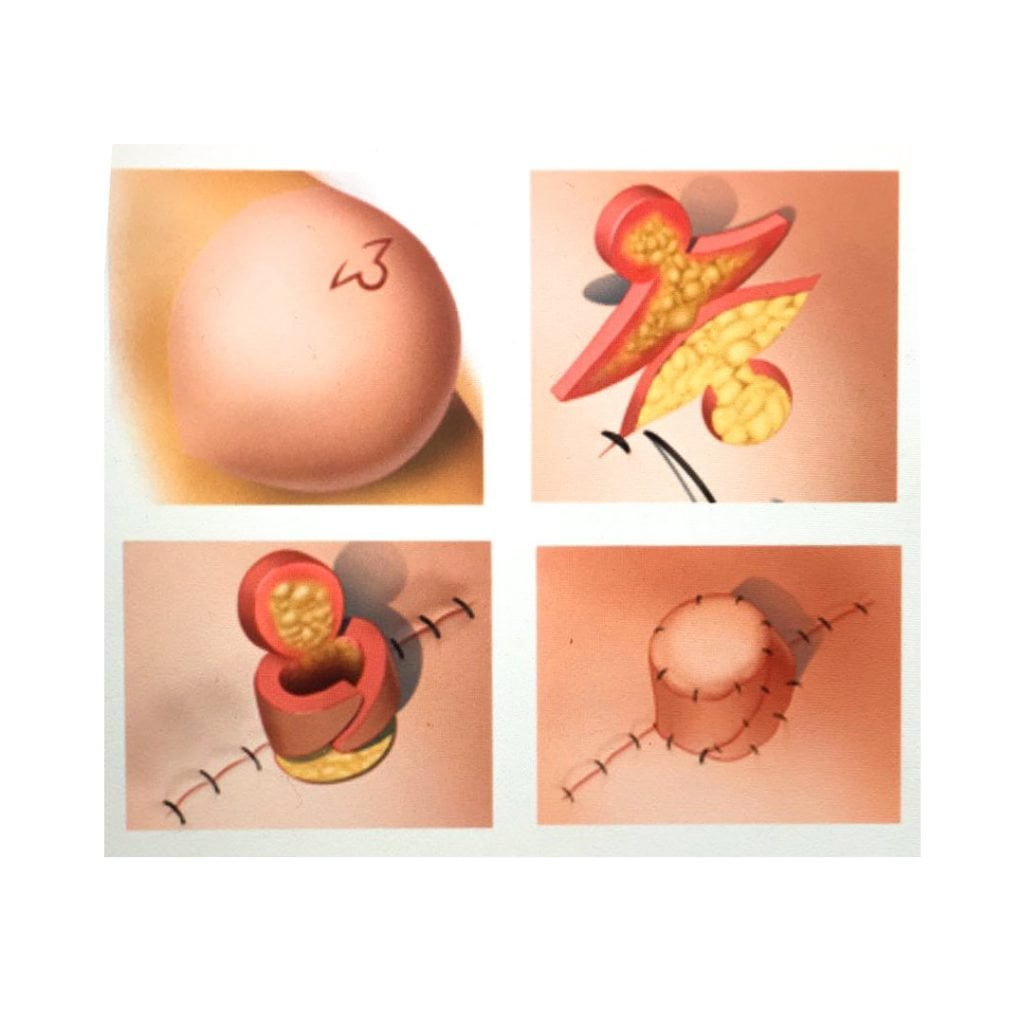
Some patients may have a congenital absence of the nipple or have lost it due to trauma, cancer, or other reasons. In such cases, the breast skin from the area where the nipple will be created is used to reconstruct the nipple and, if necessary, the areola. In some cases, it is also possible to use other tissues from the patient’s body. Transplanting a portion of a healthy nipple to the missing nipple is another possible method.
On the other hand, filler or fat injection methods are used to smooth out, make more prominent, and fuller nipples that are flattened or indistinct. The details of the chosen procedure to achieve a more attractive appearance are determined based on the existing shape, size, and projection of the nipples.
Although rare, there is a risk of infection, bleeding, and temporary loss of sensation in the nipple after nipple aesthetics. Having nipple aesthetics performed by a cosmetic surgeon with sufficient experience and expertise in this field is a crucial factor in minimizing potential postoperative risks.